

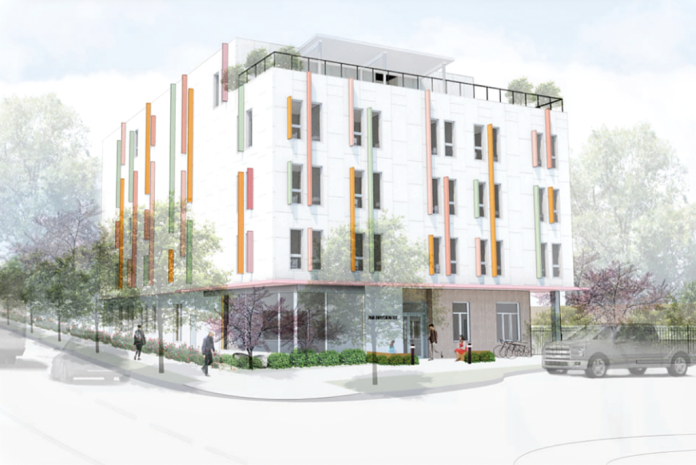
A proposed supportive recovery housing project, to be located at 250 Bryden Street in Nanaimo, has come under scrutiny from the community.
The five-storey, 50-unit development is meant to operate with a recovery-oriented framework; however, there have been discussions whether the project would operate under a “dry” model versus one of harm reduction.
Nanaimo city council had previously urged the BC government to make the project completely dry, but until recently, the Province had maintained it would be taking a harm-reduction approach.
On Thursday, September 3rd, Minister of Housing and Municipal Affairs Christine Boyle gave a statement on the development
“We know people need a spectrum of housing options to support their recovery journey and stay in the communities they love,” said Boyle.
“Recovery-oriented housing is a substance-free surrounding that helps people who are recovering from substance-use disorders stabilize in their recovery and build confidence to continue getting healthier.”
She said the Bryden Street project will operate as recovery-oriented housing once open, meaning it will be a dry facility.
“In making this determination, we considered the existing range of low-barrier housing and shelter options available in Nanaimo, as well as the community’s need for recovery-oriented housing as part of a comprehensive housing continuum,” Boyle continued.
The development will be meant to support people in recovery from substance use who have been at risk of or experienced homelessness and need additional support to stay housed.
Only people who want to reduce their exposure to drugs and alcohol will be admitted to the project via BC Housing.
Residents will be accessing health and recovery services in the community, with housing staff supporting connections to and coordination with these services.
Leonard Krog, mayor of Nanaimo, said this decision came ultimately through the advocacy of city council and Nanaimo residents.
“I would like to extend my thanks to the Ministry of Housing and Municipal Affairs for hearing the long-standing concerns of Nanaimo city council and the Newcastle Neighbourhood Association,” said Krog.
“Their voices have helped to bring this recovery-oriented housing initiative forward, an important next step in creating a complete system of care that connects housing, health and recovery.”
The project was initially eyeing a completion date of fall 2028, though a definitive construction completion date is still being finalized.
💬 Join the conversation
No comments yet — be the first to start the conversation