

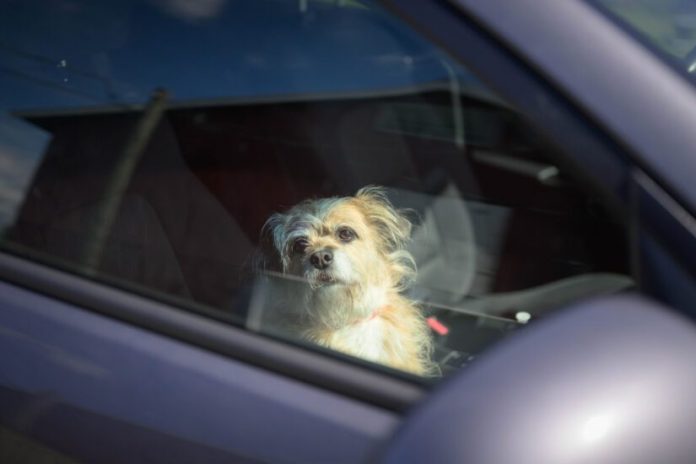
It is nearly summer again and temperatures have reached levels that can be dangerous to animals and people alike—especially if left in a vehicle.
Because this time of year always brings about instances of pets being left in hot vehicles, the BC SPCA is issuing a reminder about the risks to animals’ health and what to do when an animal is displaying heatstroke symptoms in a potentially hot car.
“People underestimate how quickly a vehicle can heat up to dangerous levels, putting animals at risk of potentially fatal consequences,” said Eileen Drever, senior officer protection and stakeholder relations with BC SPCA.
“Temperatures inside a car parked in direct sunlight can more than double in minutes so even just ‘running a quick errand’ can have a devastating outcome.”
The BC SPCA note that although leaving the air conditioning on, the windows down or parking in the shade may seem sufficient to help pets keep cool on a hot day, none are reliable options.
“If the air conditioning fails, for example, your pet could be suffering while you think they are resting comfortably in the back seat,” Drever explained. “The best and safest solution is always to leave your dog at home.”
Last year alone, the BC SPCA Animal Helpline dealt with 607 animal protection files regarding pets being left in hot cars. Of those, 151 were located on Vancouver Island, Gulf Islands and Sunshine Coast.
So far in 2026, the helpline has opened 143 files. The BC SPCA noted that this number is likely to rise as temperatures do.
What to do if a pet is seen in a hot vehicle
The BC SPCA says that anyone who spots an animal in a potentially hot vehicle should take note of the time, license plate, make and model, vehicle colour and connect with nearby businesses to have the animal owner paged to return to their vehicle immediately.
If that doesn’t work, it is best to contact your local animal control agency, police department or the BC SPCA Animal Helpline at 1-855-622-7722, especially if the animal is showing signs of heatstroke.
In dogs, heatstroke can look like exaggerated panting, lethargy, heavy drooling, an anxious or staring expression, difficulty breathing, muscle tremors, lack of coordination, restlessness, convulsions, vomiting and/or collapse.
When reporting the situation to authorities, it is best to relay as much information about the location of the vehicle as possible, including the city, address and landmarks, especially if the vehicle is in a busy parking lot.
Another measure that can be taken when possible is to cover the vehicle’s windshield with a towel or a blanket. The BC SPCA says this could help act as a temporary thermal barrier but should only be used in emergency situations and not relied on to keep pets safe under normal circumstances.
What not to do
The BC SPCA says it’s equally important to know what not to do when about an animal sitting in a potentially hot car.
They say it is of the utmost importance to never ignore an animal exhibiting signs of heatstroke. If busy at the time, simply passing along information to a nearby business, authority or individual who has more time can help save a life.
Although sometimes initial instincts point to breaking a window to help an animal in need, only local police and BC SPCA Special Provincial Constables have the authority to enter a vehicle lawfully to help a pet exhibiting signs of heatstroke.
Additionally, it is key to never confront the animal owner, especially in a way that may incite an altercation.
“When people say they would break a glass window to help an animal out of a hot car, we know they are coming from a place of compassion, but it can really escalate an already dangerous situation,” explained Drever.
“Not only are you putting yourself at risk by breaking a window, but you also risk harming the animal. Reach out to a local authority with both the appropriate training and power to act under the law instead.”
And lastly, The BC SPCA warns animal owners and Good Samaritans alike to never force water down the animal’s throat.
More information on animals in cars is available on the BC SPCA’s website.
💬 Join the conversation
No comments yet — be the first to start the conversation