
There have been hundreds of shipwrecks and mishaps which led to vessels of Vancouver Island’s past sinking to the bottom of the ocean, or being taken out of commission and scrapped.
The Maritime Museum of BC has extensive records on many of these wrecks and shared with Victoria Buzz some of the more notable shipwrecks which have taken place in the waters surrounding the island.
Here are the stories behind four of Vancouver Island’s most significant incidents and shipwrecks that happened off the coast:
SS Valencia
Before 1906, maritime safety on the west coast was neglected by Ottawa who funded several vessels to caretake the eastern coast where the west was left with very little.
In 1906, one of the most devastating shipwrecks took place when the SS Valencia was sunk in the ‘Graveyard of the Pacific’, killing more than 100 passengers which included women and children.
It wasn’t until this event that the federal government realized they had to start providing more funding to make the Pacific passageways around Vancouver Island more safe.
The SS Valencia was a 252 foot long iron-hull vessel which was initially built as a passenger ship to traverse the waters between New York City and Venezuela.
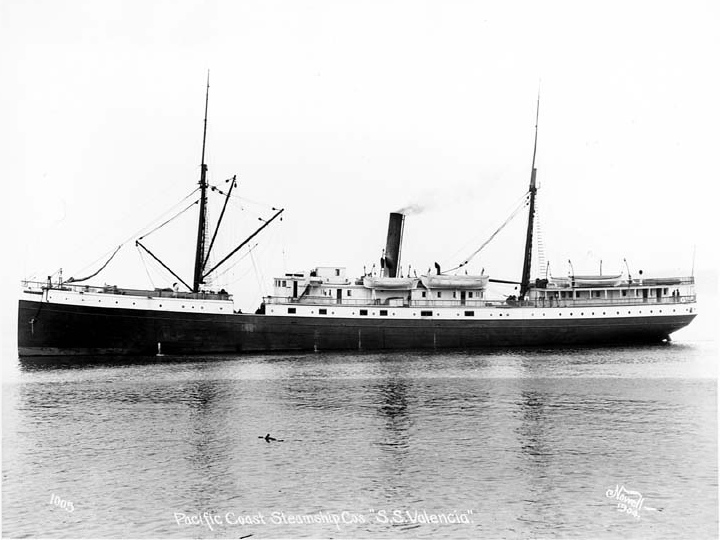
During the Spanish-American War, the vessel was used to bring troops back and forth from the Philippines until it was brought back to the west coast to act as a passenger and cargo ship once more.
In January, 1906, the SS Valencia was en route to Seattle from San Francisco, but due to horrible conditions, they missed the mouth of Strait of Juan de Fuca and eventually struck rocks on the shores of Vancouver Island near Cape Beale which is about 10 kilometres from Bamfield.
“The Valencia was one of the worst shipwrecks in BC history,” said Heather Feeney, Collections and Exhibits Manager for the Maritime Museum of BC.
“It took a really long time for it to sink, bodies were washing up forever covered in oil — it was really horrific and that was the impetus to start putting in lighthouses and actually led to the formation of the West Coast Trail, because it was a life saving trail for that area.”
Feeney says the SS Valencia was being pounded by rocks in a storm and rescues were attempted from the shore but it wasn’t possible to get a rescue boat out to the ship due to the storm.
“There was no one really around and it took days to sink — people were freezing to death, it was really bad,” Feeney told Victoria Buzz.
DGS Quadra
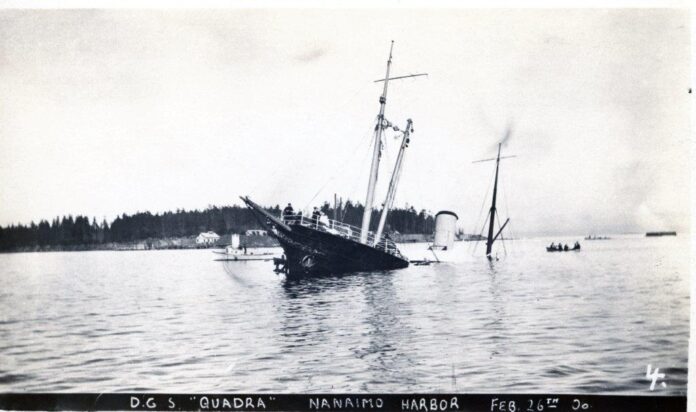
The DGS Quadra was a ‘Dominion Government Ship’ servicing the west coast in the 1910s.
The vessel was around 170 feet long and spent its days servicing buoys and bringing supplies to the lighthouse keepers. The DGS Quadra was the first of its kind on the west coast.
The DGS Quadra may not have entered the government’s service if not for the tragedy of the SS Valencia, which prompted more maritime safety measures along the west coast.
Because it was the only ship servicing the Pacific coast, it avoided being drafted into the First World War.
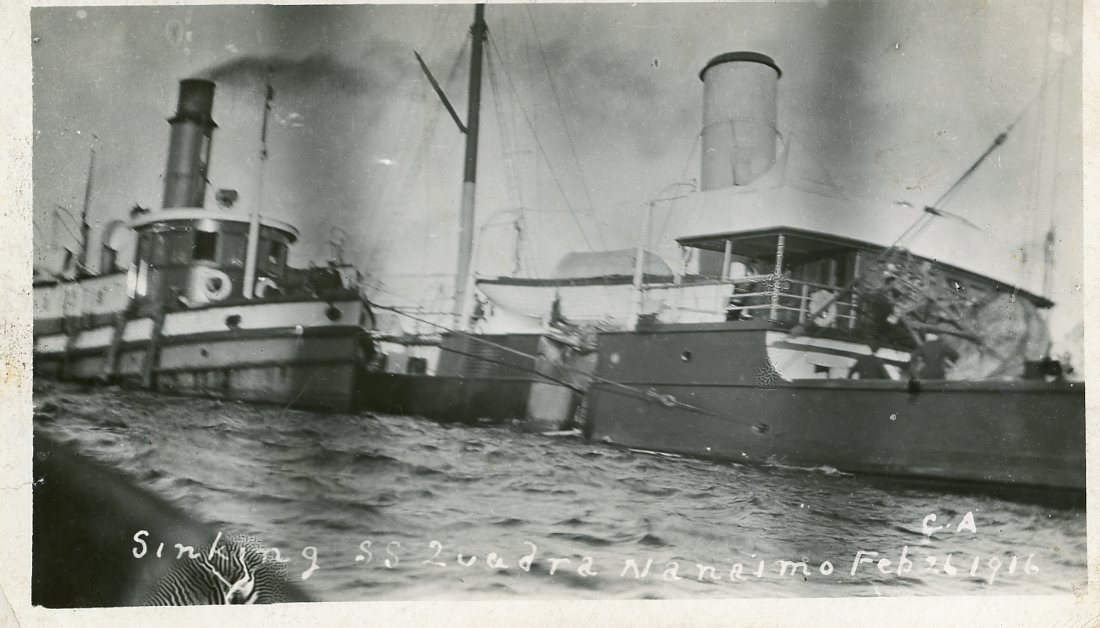
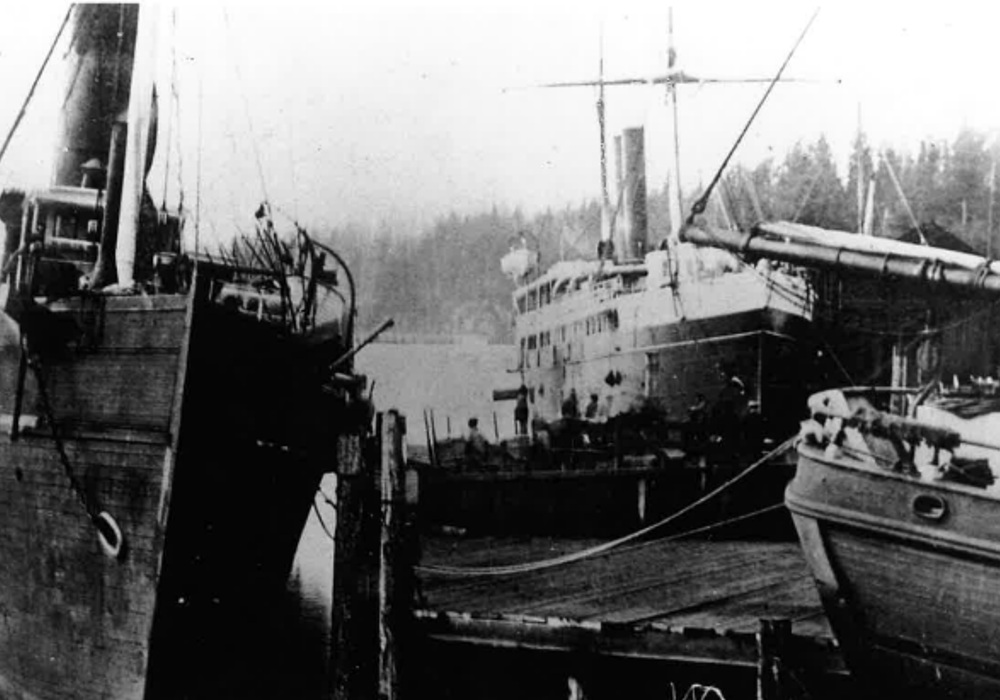
“Around 1917 it got into its little… scrape,” Feeney explained. “It was foggy as it often is and the Quadra was entering into the Nanaimo harbour.”
“It was hit by another ship called the SS Charmer. The Charmer’s captain did a good thing by continuing to ram the ship, which kept it from going out to deeper water and beached it.”
Because of the SS Charmer’s actions, the sailors had time to get off the ship once it had been beached.
“It was bad enough, once all was said and done, only the mast was visible when high tide came in,” Feeney told Victoria Buzz.
“So it did sink but everyone was fine and the Charmer actually helped quite a bit.
Following this incident, the DGS Quadra was raised, repaired and fell into the hands of a group of ‘rum runners’ during the prohibition in Canada.
“It had a bit of a second life violating the law instead of working for the government,” laughed Feeney.
Once the rum runners were caught and the Coast Guard took possession of the DGS Quadra, it was sent to a shipyard and scrapped.
SS Pacific
There have been a few different SS Pacifics, but the one which met its tragic end near Vancouver Island was the Sidewheel Steamer, which meant it was a wooden-hull vessel which had a large wheel off the side used to propel the ship.
The SS Pacific was built in 1850 and sank in 1875. It was around 220 feet long and carried people and cargo to and from San Francisco during the goldrush.
In 1861, it was damaged quite badly and refloated, according to Feeney. This is thought to be part of the reason why it sank so quickly in 1875 when by all accounts it should have been fine.
“It left Victoria on November 4th, 1875 with quite a few people onboard,” said Feeney. “She was southwest of Cape Flattery and collided with a ship called the [S/V] Orpheus.”
Feeney says the two of them would have collided around 10 p.m. in the dark and didn’t hit each other particularly hard.
The SS Pacific sank remarkably quickly following the initial collision while the Orpheus was relatively unscathed.
“It drifted for a little bit before it went down, to a point where the crew of the Orpheus thought that they sort of figured out what was going on,” explained Feeney.
“By the time that the crew of the Orpheus had fixed their rigging, and were ready to continue, there was no sign of the Pacific. They thought it had sailed on.”
“It broke in two about an hour after the collision,” she added.
It is thought that approximately 223 passengers and 52 crew members died, although during this time it is hard to predict the exact headcount. Only two people from the SS Pacific survived.
Given that the SS Pacific was a gold rush era vessel, it is believed it was carrying a significant amount of gold in its cargo hold. This has made many treasure hunters dream of finding and salvaging her remains in the depths of the Pacific Ocean.
In 2022, a Washington-based exploration company, Rockfish Inc., won the bid to salvage the gold that now lies at the bottom of the ocean amid the wreck of the SS Pacific.
No one knew what had happened to the vessel or knew the exact location it sunk for a long while because it would have been covered in silt relatively quickly and it would have decomposed a considerable amount since 1875.
Rockfish either got incredibly lucky or were impressively methodical in how they came to believe they found it.
“The tip off was finding some coal,” said Feeney. “That gave the idea that there might be a wreck down there because there’s not usually coal at the bottom of the ocean.”
SS Prince Rupert
A large passenger ship, the 307 foot SS Prince Rupert was built by the Grand Trunk Pacific Railway in an effort to compete with the Canadian Pacific Railway ships.
It operated similarly to how BC Ferries runs today, but was more of an extension of the railway — carrying freight and passengers alike, of which it could carry 1700.
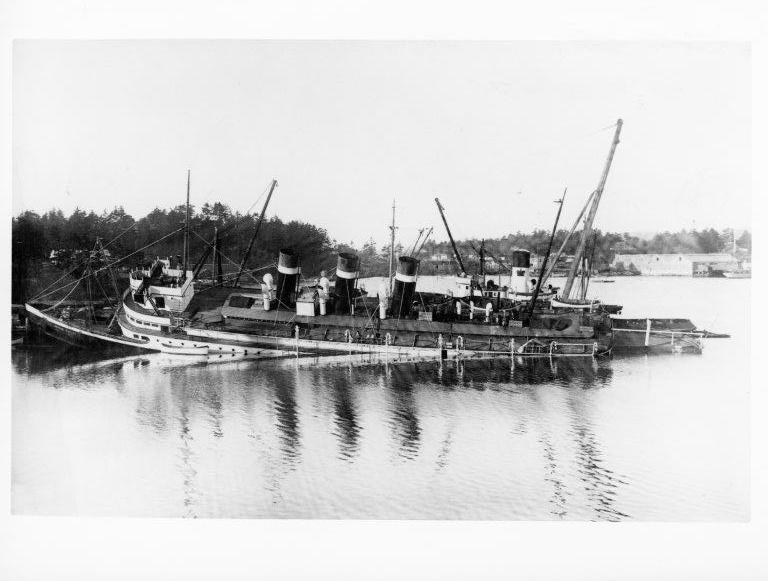
The Prince Rupert launched in 1909 and after one of several incidents, it was scrapped in 1956.
When asked what happened to the SS Prince Rupert, Feeney chuckled and replied, “what time?”
“The Rupert was considered either the luckiest or the unluckiest ship depending on how you look at it — it was in seven serious incidents but never lost a life,” she explained.
One of the ore humorous incidents Feeney could recall was in 1931, the SS Prince Rupert was dry docked in Esquimalt for repairs when a watchman on duty raised the alarm because water was flowing into the ship.
“They had time for everyone on board to grab some clothes and evacuate before the boat tipped over and settled at a 45 degree angle,” Feeney said.
“The only thing that kept it from completely flipping was that they had tied ropes from the mast to the shore.”
Feeney explained that the problem which caused the flooding turned out to be that painters had left a porthole open in one of the lower levels and when the tide came in, water rushed in and flooded the hold.
Additional strokes of bad luck the Prince Rupert had were a lightning strike in 1917 which split the mast in two and later that year the Rupert had a fire onboard.
“It also ran aground twice — she was not a lucky ship,” laughed Feeney.
“It ran aground on Glenn Island, but it ran so aground that passengers could just walk right off onto the beach.”
These are just a handful of the ships which either sank or nearly-sank around Vancouver Island of which there are hundreds of stories.
The Maritime Museum of BC is limited in space in its current location, but always has an interesting and educational exhibit in their location at 744 Douglas Street.
Right now, Feeney says they have a salmon fishing exhibit on, but next summer they will be doing an exhibit on the history of the West Coast Trail which began following the wreck of the SS Valencia.
💬 Join the conversation
No comments yet — be the first to start the conversation