
Now that the colder weather is finished (fingers crossed) and we’re starting to get some heat and sunshine, it’s the perfect time of year to be thinking about what to put in the garden!
There’s a long history and tradition of gardening in Victoria. For decades horticulturalists, landscapers and hobby gardeners have been finding the plants that do best in our climate.
Native species are getting more and more popular in gardens these days, as they have a proven record of success in our climate.
Some non-native species have been grown in the city for decades and can also be a good option. But heads up—stay away from invasive species.
Things like English ivy, Virginia creeper and bamboo often out-compete everything else and take over an area, making it impossible for anything else in your garden to thrive.
It’s best to do your research and make sure you aren’t planting anything listed on BC’s invasive terrestrial plant list.
Have no fear; we’ve compiled a list of some of the best options for you.
Whether you’re looking for a large tree in the backyard to give some shade on those hot summer days or for some options for your patio’s planter box, we’ve got you covered.
Here are 8 classic Victoria plants to make your garden stand out in your neighbourhood this year:
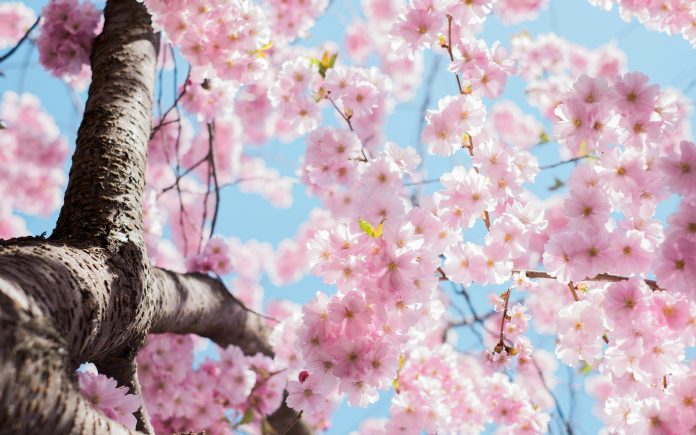
Cherry and plum blossoms
We’ve all been admiring the cherry and plum blossom trees lining our streets for the last few weeks. The city is famous for them.
But do you know the difference between cherry and plum blossoms?
Plum blossoms are generally a little more fragrant than cherries, and bloom a bit earlier in the year. Many plum blossom trees will begin blooming as early as February.
Cherries will start a little later and bloom all the way to the end of April.
While the blooming seasons may be close to finished for these trees, the foliage will continue to change colour and be beautiful into the fall, so it’s still a great time to plant them.
There are a lot of different varieties of plum and cherry blossoms, ranging from small weeping trees that aren’t likely to grow more than two or three metres at maturity, to huge trees with upright growth patterns that can reach up to 10 metres tall and wide.
Japanese maples
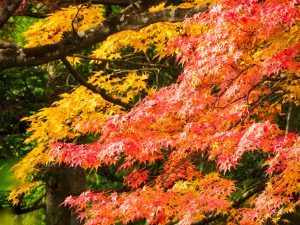
Another Japanese garden-inspired staple of Victoria is the Japanese maple tree.
These beautiful trees have been a favourite of Victoria gardeners for decades. They can be grown in containers on patios, or as centrepieces in a backyard.
It’s important to do your research with these trees, though.
Many weeping varieties will stay small, not getting much larger than two metres, while other upright varieties can grow up to 10 metres or taller.
Some recent favourite varieties include the bloodgood, which has leaves that start a dark red colour in the spring, turning to a bright red in the fall, and the coral bark, which features coral-coloured trunks and branches contrasting with lime green leaves in spring, with foliage turning orange in the fall.
Fig trees
One of the most successful fruiting trees in the region is the fig.
We’re lucky to be able to grow these Mediterranean fruit trees in our backyards, and those who grow these trees or have taken a walk through some of the neighbourhoods in the city know how much they can produce.
The most successful variety in the region seems to be the desert king fig, which produces a high yield of delicious green-yellow fruit.
Plant these trees in full sun for best results. Being native to the Mediterranean, these trees can take as much heat and sunshine as you can give them.
Arbutus
We’ve got to give some love to some native species.
Nothing says “Pacific Northwest” like the arbutus tree, Arbutus menziesii. The beautiful red bark and winding structure of these trees are incredibly unique and flat out gorgeous.
The dense bark makes it fire-resistant and hard to cut down, and the tree has been important in Indigenous communities for practical uses including medicines, tools and food.
The berries on the arbutus tree can be somewhat mealy, but with some creativity can be made into delicious jams and jellies.
These trees are very difficult to transplant, so it’s best to start them early and find a spot that the tree is going to be happy in and grow into over time.
Bunchberry dogwood
The Pacific dogwood is our provincial flower, and should be recognizable to frequent hikers in the region.
This ground cover will spread over forest floors, and features a beautiful white flower.
Creeping dogwood is a fantastic option to cover large areas of a garden, as it can spread under trees and shrubs to offer beautiful green foliage and white flowers to offer some low-growing interest.
Plant it under an established arbutus or cedar tree to give the garden a more natural, organic west coast feel.
Nootka rose
The Nootka rose is a beautiful native plant that can offer practical uses and colourful interest to your garden.
Many of us on Vancouver Island don’t realize that there is a wild rose species native to our region, and instead opt for English varieties.
The Nootka rose has a small pink flower at the ends of long, thorny branches and has a pleasant rose aroma.
The petals of the flower are beautiful when dried, and can be used in teas or added to desserts, and the rose hips can be eaten raw or used in jams and jellies.
Bleeding hearts
Bleeding hearts are a beautiful option for planter boxes or to fill in a small space in a garden.
This cute little bloom is very unique, and has a white interior partially covered by a pink outer shell. Known by some as the “lady in the bathtub” flower, the flower can be opened to reveal a lady (the white part of the flower) sitting in a bathtub (the pink part of the flower).
This plant is relatively small and blooms very early, offering one of the first big shows of the spring season.
Fuchsia
Fuchsia is a great option for those with shadier gardens or spaces.
The pollinators especially love them. Hummingbird tongues love a trumpet-shaped flower, and this plant seems to be perfectly designed to accommodate that.
There are dozens of different colours of this flower that can give your garden a pop of colour for months.
Give the pollinators something to feed on!
💬 Join the conversation
2 people are talking about this
Some pictures of these lovely garden plants would be great, and helpful, like the Japanese maple.
My bleeding heart is blooming beautifully at the moment.