As Halloween draws ever-nearer, an anthropology instructor at Camosun College has endeavoured to reveal the history behind some of the traditions that make Halloween so exciting.
Dr. Katie Waterhouse says that what Halloween is today is a bit of an amalgam of traditions from several distant cultures, but much of it stems from Celtic roots.
“What we think of as Halloween today, a lot of that comes from the Celtic traditions of Samhain,” Dr. Waterhouse told Victoria Buzz.
She says that this historic Celtic festival was celebrated to mark the end of the harvest, as well as the transition of seasons.
However, this time of year was also a time when the Celts believed the veil between the spirit world of their ancestors and the living was at its finest.
According to Dr. Waterhouse, a few thousand years ago, the people celebrating Samhain had a deep connection to the spirit world which allowed them contact with their ancestors, but also the risk of contact with malevolent spirits.
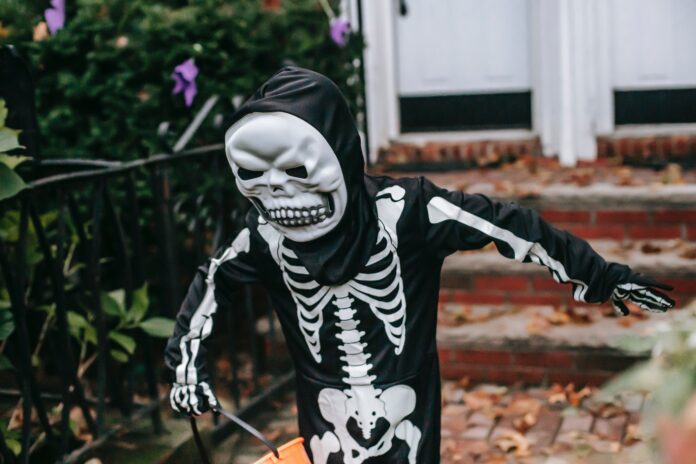
Some themes of spirit contact are represented still today in why people dress up in costume on Halloween.
“What’s associated with Halloween is that there are lots of traditions that people will do to either encounter the spirits or to protect themselves,” she explained.
“I read one thing about costumes as being a way to hide from your ancestors, so if they have a bone to pick with you, they won’t find you because you’re hiding in costume. But there’s other stories I’ve heard where dressing up, especially the more spirit-based costumes, is a way to represent the spirits.”
Dr. Waterhouse says that her colleague Nicole Kilburn, who teaches an anthropology of death class at Camosun, often speaks of the community feel of Halloween.
“She says that people would extinguish the fires in their homes to make it look uninhabited so the angry, unsettled spirits wouldn’t go there,” said Dr. Waterhouse.
“Instead they would gather out in the streets with community sharing and celebrating in that time, but also just protecting themselves.”
Nowadays, light can be used on Halloween night to indicate an openness, where a light on a porch can indicate participation in trick-or-treating, whereas a home with a dark stoop can indicate the opposite.
Another tradition Dr. Waterhouse can trace the origins of, is the carving of pumpkins to keep away unwanted spirits.
“Carving pumpkins is originally from Irish carving of root vegetables, but when those immigrants came to North America they encountered pumpkins, which are a domesticated crop, and they were like, ‘this is way easier,’” she said.
She added that being able to understand the global perspective of the movement of people and where new crops came from in this instance, people can learn about how culture intertwines with place.
To Dr. Waterhouse, the most fascinating contemporary Halloween tradition comes in the form of a 12-foot skeleton.
“They released in 2020 for Home Depot, I believe that was their new Halloween decoration during the first COVID Halloween when we were so much more stuck at home and desperate for community connection,” she explained.
“People invested so much more in their yards and the giant 12-foot skeleton has sort of expanded since then.”
Dr. Waterhouse wonders now if the giant skeletons became so popular because they were new, or because of an extra need for community from people who were feeling detached during the pandemic.
She says that ultimately, looking at mainstream celebrations like Halloween through an anthropological lens can reveal so much about the blending of cultures.
“What anthropology offers is, by bringing in a cross-cultural perspective, that we can seek out the story and the way that the traditions change or alter over time,” said Dr. Waterhouse.
“By looking at the migration and the movement of people, and what Halloween is in a contemporary North American context, we can find where those origins are.”
She also noted that by teaching anthropology students at Camosun about popular contemporary celebrations like Halloween, they are able to see the history of cultural practices in a much more tangible way.
💬 Join the conversation
No comments yet — be the first to start the conversation