

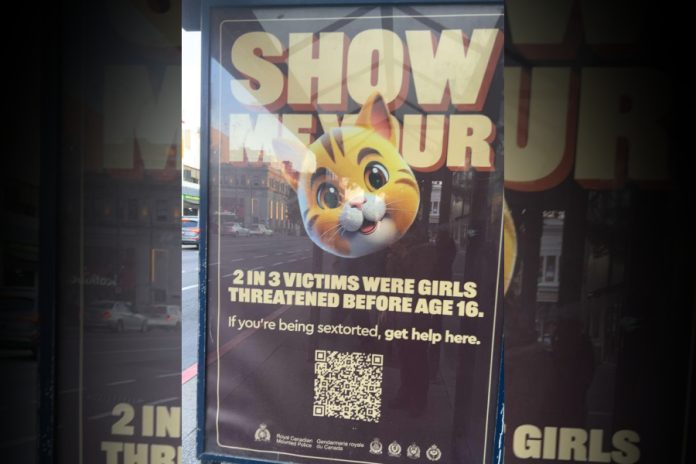
A bold new public awareness campaign by the RCMP is turning heads in Victoria—literally.
Several bus shelters around the city are now displaying an ad featuring blunt, unfiltered language commonly used by online predators who target young girls.
The most jarring parts of the ad is its hook title, “Show me your 🐱”—a phrase referring to female genitalia.
The graphic wording is intentional. It mirrors the explicit messages predators often send to teens online, aiming to break through the noise and spark a serious conversation about the realities of sextortion—especially among youth who may not recognize manipulative or coercive behaviour.
The ad also states that “2 in 3 girls who are sextorted were targeted before they turned 16.” A scannable QR code directs viewers to an RCMP page offering advice and resources for victims and concerned individuals.
A photo of the ad recently surfaced on Reddit, sparking immediate conversation. While some found it shocking, others applauded it for meeting teens where they’re at.
“This is the type of language girls are exposed to on the internet, so it’s not going too far in this advertisement,” said one user, identifying themselves as a Grade 8 teacher. “Girls need to know what language is appropriate and inappropriate from others… I appreciate this kind of exposure as a learning opportunity.”
Others admitted the ad opened their eyes to a reality they hadn’t considered.
“I would never have guessed this is a question girls get asked,” wrote another commenter. “I find this horrifying… but maybe that’s the point.”
The ad’s direct language and emoji use aren’t accidental—they’re designed to reflect real tactics used by predators online. The goal is to educate, alert, and empower, especially among youth who may feel isolated or ashamed when victimized.
Still, the ad has stirred debate.
“How is this something controversial?” one commenter asked. “Are you aware of how many young women get sexually exploited, or is it just uncomfortable for you to see the truth?”
According to the RCMP’s campaign materials, sextortion is not only widespread, it’s deeply traumatizing for victims—many of whom are targeted before they even hit high school. The page linked through the ad emphasizes calm, control, and confidentiality, “Don’t panic, don’t pay, and don’t send more.”
Victims are encouraged to block extortionists, secure their accounts, and report the situation. Police stress they won’t inform parents without consent and can instead offer emotional and technical support, including assistance in having images removed from the internet.
The page also outlines red flags to watch for, such as new or suspicious social media accounts, refusal to video chat, or use of stock photos.
And while the safest advice is simply “don’t send nudes,” it even includes harm-reduction tips for those who choose to—advising teens on how to protect their identities in images.
While reactions to the campaign remain mixed, the overarching response is one of appreciation. At the very least, it’s sparking a critical conversation.
“It’s simple, empathetic, to the point,” one Redditor wrote. “How else would you reach out to teen victims of sextortion?”
The RCMP’s full list of safety tips and victim resources can be found here or by scanning the QR code on the ad itself.
💬 Join the conversation
No comments yet — be the first to start the conversation