

With Black Friday and Cyber Monday behind us, millions of packages are still sitting in warehouses, waiting to be shipped as Christmas shopping kicks into high gear.
The ongoing Canada Post strike is heading into the fourth week, significantly affecting mail and package delivery during what is traditionally the busiest time of year for the corporation.
With Canadians preparing for the holidays, delays in sending and receiving packages have become a widespread issue.
According to a survey conducted by the Angus Reid Institute (ARI), 7 in 10 Canadians report experiencing delays due to the strike, with the situation expected to worsen if the labour action continues.

This period typically sees Canada Post delivering approximately two million packages daily, but work stoppages by the Canadian Union of Postal Workers (CUPW) have led to disruptions at post offices nationwide.
The labour dispute revolves around several contentious points.
CUPW is demanding a 24% wage increase over four years, improved sick leave benefits, and a reduction in the use of part-time and contract workers.
The union also opposes Canada Post’s push to add weekend deliveries.
Canada Post, on the other hand, argues that these changes are necessary to address financial losses, which amounted to nearly $500 million in the first half of 2024. The corporation’s market share in parcel delivery has also declined from over 60% pre-pandemic to less than 30% in 2023 as competitors like Amazon and FedEx gain ground.
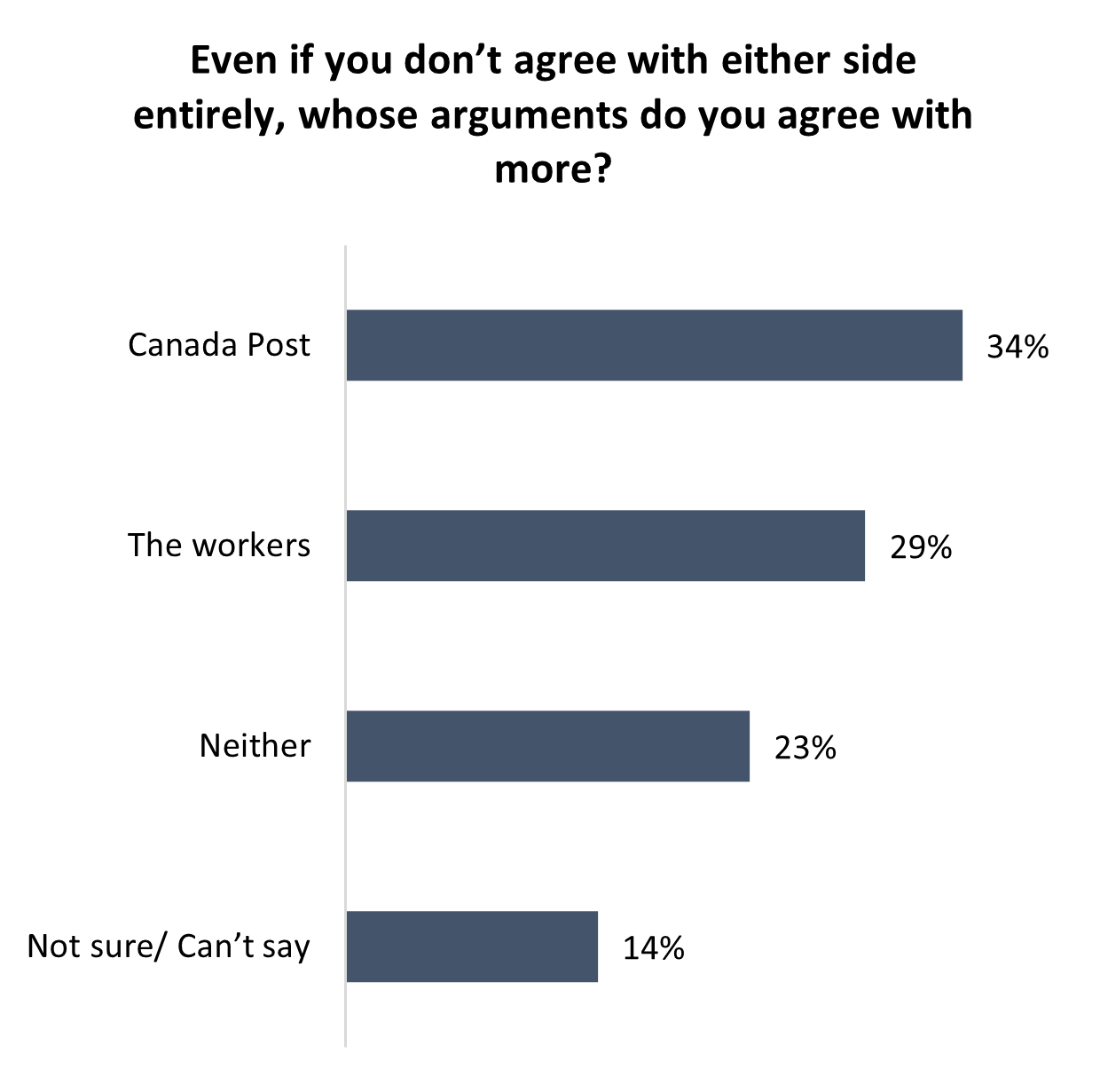
According to the ARI survey, 34% of Canadians side with Canada Post, supporting its efforts to adapt to financial pressures and operational challenges. Conversely, 29% back the union’s demands for better wages and working conditions.
A significant portion of respondents (23%) remain neutral, expressing frustration with the delays rather than aligning with either party.
The report also found that Conservative-leaning respondents are more likely to support Canada Post’s position, while NDP voters predominantly side with the union. Meanwhile, Canadians affected most acutely by the strike—including seniors and rural residents—are divided in their views but share a common desire for a resolution.

The strike’s effects are being felt across the country, with rural communities and younger demographics reporting higher levels of disruption.
Seniors, who often rely on traditional mail services for bills and government benefits, have also expressed concerns. While the federal government has assured that benefits will be delivered on time, delays in other mail services remain a challenge.
Three-quarters of respondents aged 35 to 44 reported experiencing delays, the highest among any age group surveyed. Regionally, BC and Ontario residents reported the most divided opinions, while rural Canadians were more likely to say the strike has significantly impacted them compared to their urban counterparts.
The Angus Reid Institute’s survey, conducted online between November 29th and December 2nd, polled 3,003 Canadians. The organizations says the margin of error for a probability sample of this size is ±1.5 percentage points, 19 times out of 20.
The full survey results are available on ARI’s website.