

A new monument park honouring Japanese Canadians affected by internment during the Second World War is officially under construction in Victoria.
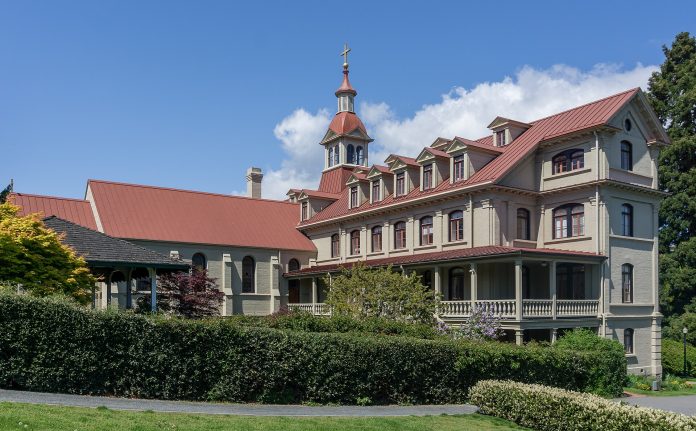
The project, in partnership between the BC governement and the Japanese Canadian Legacies Society, will be located just south of St. Ann’s Academy.
The site will serve as a space for reflection, learning, and remembrance.
“The forced displacement and internment of Japanese Canadians was a grave injustice,” said BC Attorney General Niki Sharma.
“This monument park will stand as a place of remembrance, honouring those who endured so much and ensuring their stories are never forgotten.”
The park’s centrepiece will be a wall of names recognizing more than 22,000 Japanese Canadians—most of them born in Canada—who were forcibly displaced from their homes in BC during the 1940s.
It will also include the names of 3,000 children born after the uprooting. Surrounding the wall, a Japanese-inspired garden will offer a peaceful setting for reflection and community gatherings.
“By honouring our people, most of whom have been lost to time, we seek healing across generations,” said Susanne Tabata, CEO of the Japanese Canadian Legacies Society.
Development has included consultation with the Japanese Canadian community, Victoria residents, and the Songhees and Esquimalt First Nations.
The park’s design and construction are being led by KPMB Architects and PFS Studio, with completion expected by fall 2026.
“This monument park is a powerful reminder of the harm caused when racism and fear shape public policy,” said Amna Shah, parliamentary secretary for anti-racism initiatives. “It honours the strength and resilience of Japanese Canadians and reminds us to confront racism wherever it exists.”
The project is part of a $100-million provincial redress package announced in 2022, which supports cultural and educational initiatives recognizing historical injustices against Japanese Canadians.
Beginning in 1942, more than 90% of Japanese Canadians living in BC were detained under the War Measures Act, losing their homes, possessions, and businesses.
It wasn’t until four year later, in 1949 after the war ended, that they were allowed to return.