

UPDATE:
On Tuesday, the US Geological Survey (USGS) reported that strong winds were stirring up volcanic ash from Mount St. Helens, which last erupted in 1980.
While it was speculated ash detected in the Greater Victoria area, the USGS said it is highly unlikely that any would have reached the region.
It is believed the ash was blown over from the Bear Gulch wildfire in Washington, located west of Seattle in the Olympic National Forest.
— original:
Don’t be alarmed, Victoria!
If you stepped outside this morning and thought the apocalypse had finally arrived, don’t worry.
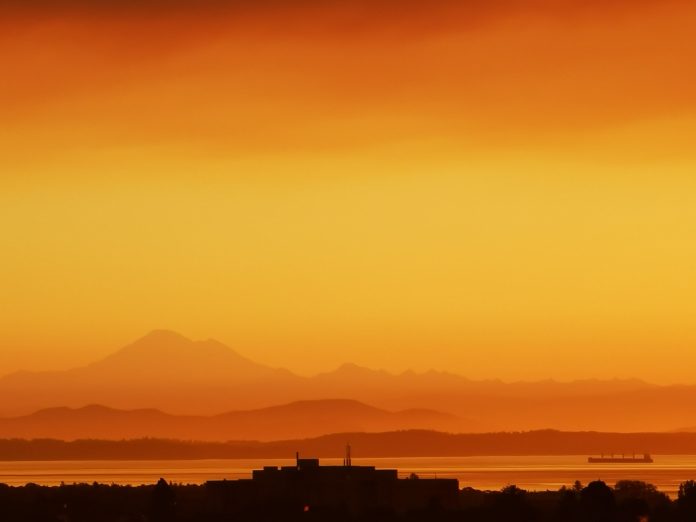
That strange orange glow in the sky and the layer of ash on your car have a real (and somewhat old-fashioned) explanation.
Strong winds near Mount St. Helens in Washington state have stirred up old volcanic ash from the famous 1980 eruption.
Those winds have carried the dusty remnants all the way to Greater Victoria.
In 1980, the destructive eruption sent a massive debris avalanche into the air, spreading ash across the Pacific Northwest. Usually, that volcanic powder stays buried in the ground.
However, dry weather and severe drought conditions around Mount St. Helens have made it loose and vulnerable.
When strong winds sweep across the area, the ash gets lifted back into the air and blown far away from where it originally settled.
Reports from Washington also indicate that hazy skies are affecting their communities. This isn’t the first time this has happened. It occasionally occurs when the mountain’s slopes are dry, snow-free, and hit by bursts of strong wind.
So no, it’s not the end of the world. It’s just a reminder of a major eruption that continues to make its mark, 45 years later.
💬 Join the conversation
No comments yet — be the first to start the conversation