

Salmon run underway at Goldstream Provincial Park despite challenges
Watch as they complete their incredible life cycles.

Let the annual spawning season begin!
With fall now in full season, the annual salmon run is back in full swing.
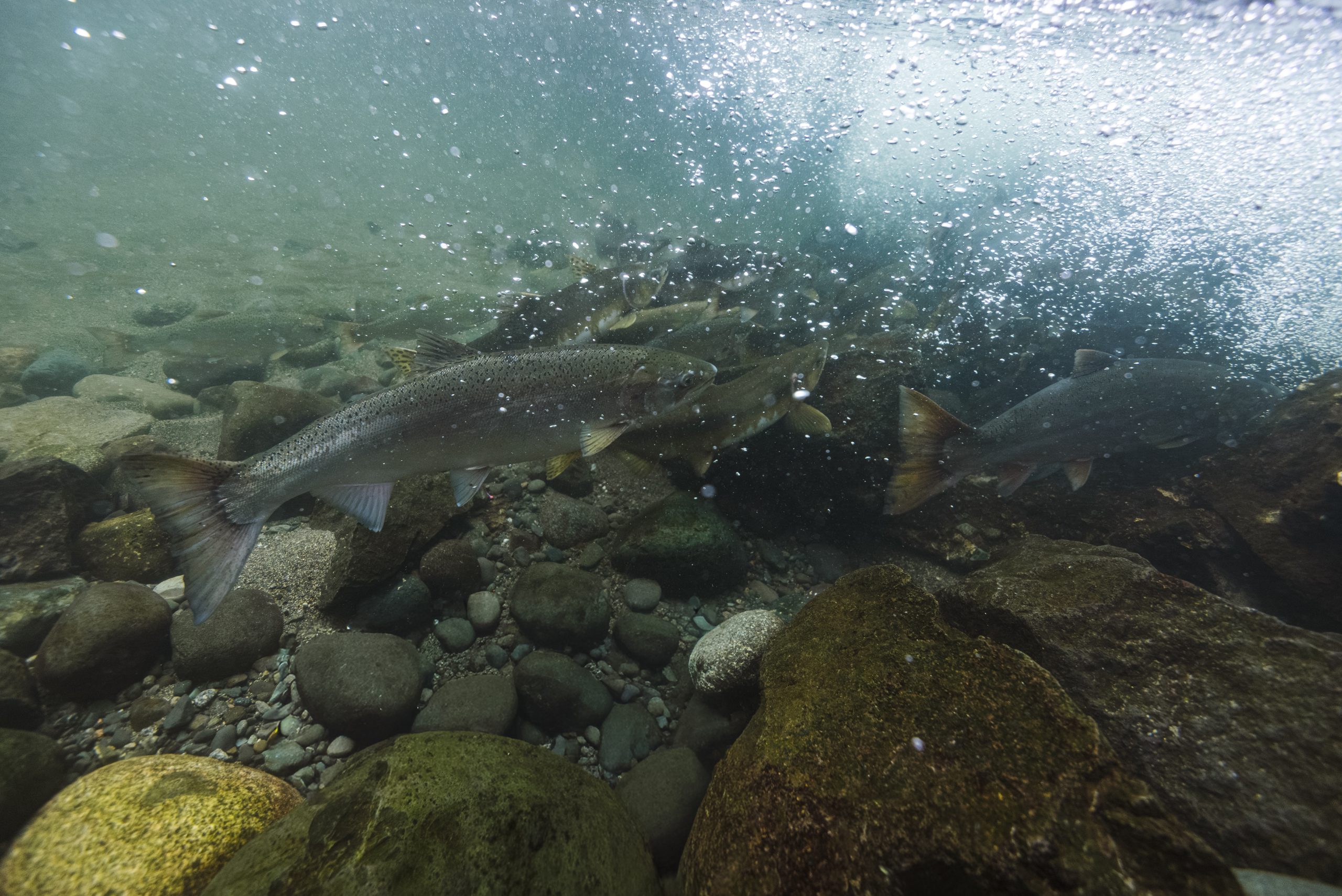
From the mid October until the start of December, thousands of salmon return to the river at Langford’s Goldstream Provincial Park to spawn.
There are multiple species of salmon that can be seen swimming through the river, including the most common species, chum salmon, alongside coho and Chinook. Visitors may also spot steelhead and cutthroat trout in the waterways.
The incredible journey for the salmon takes them from the ocean, where they live most of their lives, back into the freshwater rivers and streams of Goldstream Provincial Park.
Once the fish make it back to the river, they can spend days or even weeks at the estuary near the mouth of the river.
As they continue past the estuary, the salmon go through some fascinating changes to help them survive the transition from saltwater to the freshwater spawning grounds.
Along with both male and female salmon going through some significant colour changes, the male chum salmon develops the species’ recognizable hooked jaw.
After making it back to the river, the fish finish their lifecycles by laying thousands of eggs before dying in the same riverbed they were born in.
Highway expansion and salmon run population struggles
While the salmon run is an amazing spectacle every year, the event is not without its struggles.
Goldstream River lies on the territories of W̱SÁNEĆ First Nations, specifically Tseycum, W̱JOȽEȽP, SȾÁUTW̱, Pauquachin and Malahat First Nations.
The area is vulnerable due to a myriad of reasons, according to Sarafina Henderson, who works with the Wilderness Committee at Goldstream.
“There are various human-driven impacts that threaten salmon,” Henderson told Victoria Buzz.
“While the numbers aren’t what they should be, the runs continue, and there are so many ways that we can support them when they are returning.”
One of those ways, according to Henderson, was to get involved with a protest against a proposed highway expansion earlier this year.
The expansion was decided upon in 2012 by the BC government, with many of the projects already having taken place.
The section next to Goldstream Park, however, had not yet come to fruition.
In February 2026, after weeks of rallies led by W̱SÁNEĆ Elder ZȺWIZUT Carl Olsen, who works with the Goldstream Protectors, the highway expansion next to the park was removed from the provincial budget.
The removal of the expansion from the budget is considered a short-term win for the Protectors, who say they will continue to put pressure on the government to explore alternatives that are more effective and do not include making the highway wider and threatening the salmon population in the area.
For so many on Vancouver Island, the Goldstream salmon run is an event that is a part of their identity living in the region.
From family outings to class trips, Henderson explained that many children on the island learn about watersheds and ecology and form the foundation of their knowledge of life cycles and biology by witnessing the miraculous journey of the salmon in the park.
The salmon are not only beautiful, but an integral part of the food chain for the forest ecosystem in the region.
“When you think about how beautiful Goldstream is, you have to think about salmon,” Henderson said.
“When they’re coming back from the ocean, they have so much marine-derived nutrients, and they’re bringing it back into the forest from animals like raccoons and bears and eagles and other birds.”
She went on to explain that Goldsteam is a critical place for teaching people about the environment and environmental consciousness, and that experiences at the Goldstream River are often carried with people for the rest of their lives.
Unfortunately, Henderson says that the park is not given the care it needs.
“The bathrooms aren’t working. There are outhouses, and sometimes they’re not pumped as often as they could be,” Henderson said.
“It can be kind of unfortunate to see that a place that is so beloved and so important culturally for W̱SÁNEĆ First Nations could be cared for more.”
Another threat to the salmon comes from environmental changes in the region, like the atmospheric river experienced on Vancouver Island in 2021.
Major flooding events had long-term impacts on the salmon in the area, displacing eggs and affecting the hydrology of the area.
“Salmon are extremely vulnerable to climate change,” Henderson explained.
“The Province can look into better public trains and opportunities to reduce pollution and potential risk of future gasoline spills, which has happened in the past, and it could also help with reducing overall emissions.”
Victoria Buzz reached out to the Department of Fisheries and Oceans, as well as the Ministry of Environment to comment on the Goldstream salmon run numbers this year, but both declined to comment.
For now, while salmon numbers may be lower than they have been in previous years, the opportunity to watch the animals’ magnificent life cycles end and begin anew is still there for people to appreciate.
It’s important to consider the health of the salmon when doing so, however.
Goldstream Provincial Park’s rules and tips for salmon watchers
While the Goldstream Nature House typically hosts school and community programs to teach visitors all about the salmon spawning season, the nature house is closed this year due to infrastructure damage and an ongoing power outage.
While the nature house may be closed for events, guests are welcome to create their own adventure through the park, or check out events hosted by the Wilderness Committee, which can often be found on their Instagram page here.
There are also some tips that hopeful salmon watchers should consider for the best salmon run experience.
It’s best to visit the park in the morning hours, when waters are clearer and visitors are less abundant. Rainfall can also often trigger more movement through the streams and rivers in the area.
It is recommended to avoid wearing bright coloured clothing which salmon can see, especially red, purple and pinks.
If possible, it’s suggested to avoid weekend afternoon visits because the park is very crowded.
Parking can also be a problem at the park, and car pooling is suggested.
Wearing polarized sunglasses can cut down on glare from the water, ensuring the best viewing experience possible.
According to the Park, visitors must also remember that the salmon come first, and they ask that visitors adhere to the following rules:
- Keep dogs on a leash out of the river, or don’t bring dogs at all
- Approach the river bank slowly and quietly
- Don’t throw anything in the river
Watch the salmon complete their incredible life cycles this year at the salmon run at Goldstream Provincial Park!
Join the conversation
No comments yet — be the first to start the conversation
Add Victoria Buzz as a preferred source to help our reporting appear more often in Top Stories and Google’s AI results.