

A final investigation report has been released into a fatal helicopter crash that occurred on Vancouver Island in August 2024.
The Transportation Safety Board of Canada (TSB) has published its findings into the crash near Brooks Peninsula, which claimed the life of the pilot.
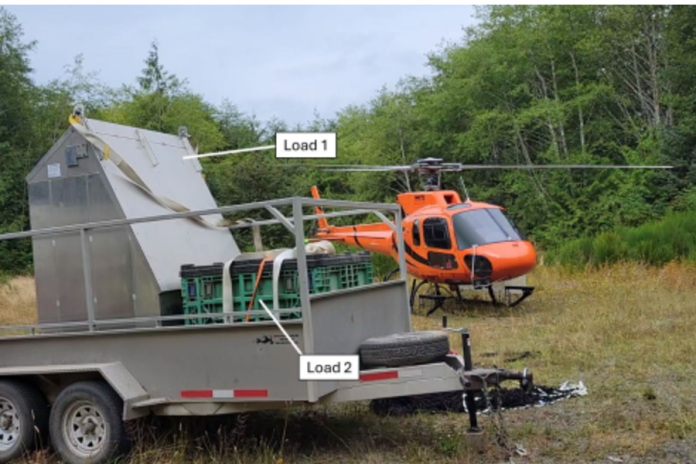
According to the report, an Airbus AS350 B2 helicopter operated by West Coast Helicopters Maintenance and Contracting Ltd. departed Port McNeill Airport on the morning of August 15th, 2024.
The flight was part of a series of trips to transport personnel and equipment to a remote site.
After completing earlier legs of the trip, the pilot began longline operations with an external load suspended beneath the aircraft. The helicopter was observed flying normally after departure, but later tracking data showed it approached the job site, hovered briefly, then departed and began climbing before entering a rapid descent.
The final recorded data indicated a descent rate exceeding 9,000 feet per minute before the helicopter struck terrain in a remote area about 1,000 feet northeast of the work site. The aircraft was destroyed on impact and there was no post-impact fire, according to TSB.
The pilot, who was the only person on board, was killed.
Investigators found the external load had been released prior to the crash and was located separately from the wreckage. The report notes there was no evidence of a mechanical failure that would have affected the helicopter’s ability to be controlled.
Weather conditions in the area at the time included low cloud cover and reduced visibility, with some areas reporting cloud ceilings as low as 400 feet. The terrain near the crash site was likely obscured.
The pilot held a commercial helicopter licence and had more than 1,200 hours of flight experience. According to the report, there was no indication that medical issues or fatigue played a role.
The TSB classified the investigation as limited in scope, meaning it does not assign fault or determine liability.
In its safety message, the board emphasized the risks of flying in reduced visibility, particularly in mountainous terrain, and the importance of maintaining clear visual conditions during flight.
All in all, the report highlights reduced visibility as a key risk factor at the time of the crash.
💬 Join the conversation
No comments yet — be the first to start the conversation