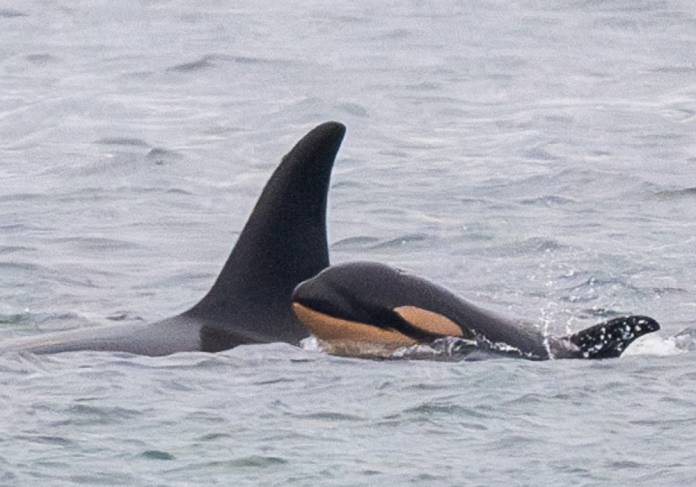
Though the Southern Resident killer whales’ population has been dwindling with only 74 animals left traversing the Salish Sea, new hope was bestowed upon J pod when a new calf was born last week.
According to the Center for Whale Research (CWR), it was brought to their attention that a new calf had been seen traveling with J pod as of Friday, December 20th.
The group of Southern Residents had been in the area of Puget Sound, near Seattle, Washington.
Because this area is outside the CWR’s research range, they were not able to actively observe J pod while they were in this region.
Currently, all the CWR has is photos and video provided by people who have been able to observe the calf, so they are unable to give it an identification, or identify who its mother is.
“The calf was potentially seen traveling with J35 but CWR researchers have not been able to be on the water yet to have our first official encounter with the new calf to confirm,” CWR said in a social media post.
“It often takes multiple encounters for our research team to assess these whales, assign a designation for the new whale, and confidently determine who the mother of a calf is.”
Once the CWR is able to better observe the new calf and how it interacts with J pod, they will be able to give the calf an identification and better follow along with how it is faring with the group.
The CWR’s mission lies not only in research and observation, but also in advocacy for the Southern Residents.
“The Southern Resident killer whale population needs ample access to their food supply, mainly salmon, to survive and thrive,” continued the CWR.
“Every single birth counts and these whales need enough fish to be able to support themselves and their calves.”
They added that salmon recovery through habitat restoration, removal of dams and rational management of fisheries in the Pacific Northwest is the only way to stabilize the population.