
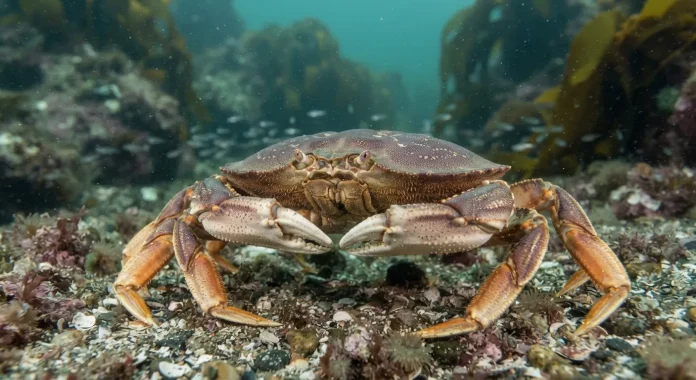
If you’re hoping to bring home a tasty catch while enjoying a day by the water, you don’t need a boat to go crabbing on southern Vancouver Island.
Several public piers and waterfront docks around Greater Victoria and the Cowichan Valley provide access to productive crabbing waters directly from shore.
It can be an inexpensive and family-friendly way to spend a summer afternoon, but there are important rules to understand before dropping a trap which we included at the end of the list of locations.
Most importantly though, a fishing licence is required, traps must meet federal requirements and not every crab can legally be kept so make sure to learn the rules and get a proper fishing license before heading out for the day.
If you’re ready to go, here are eight places where you can try crabbing without needing a boat:
Bevan Fishing Pier in Sidney (also known as Sidney Pier)
The Bevan Fishing Pier is likely the best-known shore-based crabbing location on the Saanich Peninsula.
Located at the end of Bevan Avenue, the public pier extends into the waters off Sidney and is regularly used for fishing and crabbing. Red rock crabs are commonly caught here, although Dungeness crab can also turn up in traps.
The pier is accessed through Eastview Park, which has picnic tables, benches and nearby street parking. Downtown Sidney’s shops and restaurants are also only a short walk away, making it a convenient option for families.
The pier can become busy during the summer, so crabbers should keep traps, buckets and ropes out of the main walking area. And if you’re leaving your catch to stroll through town, make sure to leave your contact information on your bucket or gear in case RCMP or DFO need to chat with you.
James Island Road Wharf in Central Saanich
The public wharf at the end of James Island Road overlooks Saanichton Bay and has been used by local crabbers for years.
In fact, the District of Central Saanich has previously described the municipal wharf as a popular spot for crabbing.
The dock is considerably smaller than Sidney’s fishing pier and parking is limited. It is also used by residents travelling to and from James Island, so visitors should avoid blocking access or placing traps where they could interfere with boats.
Because of its smaller size, this location may be better suited to individuals or small groups.
Brentwood Wharf in Brentwood Bay
Brentwood Wharf provides public access to the sheltered waters of Brentwood Bay and Saanich Inlet.
The wharf is located off Verdier Avenue and is used for water access, boating and other marine activities. Crabbers should watch for posted restrictions and keep traps away from vessels, docks used for loading and navigational routes.
The protected waters can make Brentwood Bay more comfortable during windy weather, but conditions and currents can still change quickly.
Rotary Pier in Sooke
The Rotary Pier at the end of Sooke’s marine boardwalk is another popular place to drop a crab trap without a boat.
The pier is reached through Ed Macgregor Park or from the parking area near the end of Murray Road. The surrounding boardwalk offers views across Sooke Harbour and is regularly used for walking, wildlife viewing, fishing and crabbing.
Both red rock and Dungeness crab can be found in Sooke Harbour, although catching a legal-sized male is never guaranteed.
The boardwalk and pier are accessible, but the route from the upper portion of Ed Macgregor Park includes a long switchback. Those carrying heavy traps, buckets and coolers may find the Murray Road access more convenient.
Mill Bay Community Wharf
Located at 2599 Keir Road, the Mill Bay Community Wharf offers access to Saanich Inlet from the Cowichan Valley side of the Malahat.
The public facility includes a community wharf and boat launch. Crabbers should stay clear of the launch, moored vessels and areas needed by people loading boats.
It is farther from Victoria than the Sidney and Sooke locations, but could be worth including as part of a day trip through Mill Bay.
Maple Bay Municipal Wharf
Maple Bay’s public wharf provides approximately 300 feet of dock space in the protected waters east of Duncan.
Fishing and crabbing have both been identified by North Cowichan residents as existing recreational uses of the wharf. However, it remains an active marine facility and crabbers must give boats priority.
The narrow bay, nearby beach and surrounding community make it another possible shore-based option for those willing to travel farther into the Cowichan Valley.
Cowichan Bay Fishermen’s Wharf
Crabbing is permitted under specific conditions at the Cowichan Bay Fishermen’s Wharf.
According to the wharf association, crab traps are tolerated from the floats only and cannot be dropped from the main wharf. Traps must be lowered straight down rather than thrown outward and they cannot be left unattended.
Anyone dropping a trap is responsible if their equipment becomes tangled with a vessel. Unattended traps may be removed and confiscated.
This is a working wharf, so commercial vessels, wharf employees and other marine operations must be given priority.
Pacific Gateway Marina in Port Renfrew
Port San Juan is home to both red rock and Dungeness crab, and Pacific Gateway Marina includes crabbing and fishing among the activities available around the marina.
Unlike the municipal piers on this list, Pacific Gateway is a privately operated working marina. Anyone planning to crab directly from its docks should contact the marina beforehand to confirm where public access is permitted and whether any fees or restrictions apply.
The trip also offers an opportunity to visit Port Renfrew, Pacheedaht Beach and other destinations along the Pacific Marine Circle Route.
You need a tidal waters fishing licence
Everyone fishing or harvesting crab in BC’s tidal waters must hold a valid BC Tidal Waters Sport Fishing Licence.
That requirement applies to adults and children. Juvenile licences for anyone under the age of 16 are free, but the licence must still be obtained.
For the 2026-27 season, a Canadian resident adult licence costs:
- $6.46 for one day
- $13.54 for three days
- $19.70 for five days
- $25.86 for an annual licence
An annual licence for a Canadian resident aged 65 or older costs $13.54. A salmon conservation stamp is not required when only harvesting crab. It is required if you intend to catch and keep salmon.
A printed or electronic copy of the licence must be carried while crabbing and presented to a fishery officer if requested.
Licences can be purchased through Fisheries and Oceans Canada’s National Recreational Licensing System online.
How many crabs can you keep?
Across southern Vancouver Island, the combined daily limit is four Dungeness and red rock crab per licensed person. That means someone could keep four Dungeness, four red rocks or a combination of the two adding up to no more than four.
The possession limit is twice the daily limit, meaning a person may possess up to eight crabs while away from their ordinary residence.
Daily limits are not a guarantee that every crab caught can be kept. Sex and minimum-size restrictions also apply.
Female crab must be released
It is illegal to possess female Dungeness or red rock crab. Females must be released immediately, even when they are larger than the minimum legal size.
The underside of the crab can be used to identify its sex. A male has a narrow, lighthouse-shaped abdominal flap, while a female has a noticeably wider, beehive-shaped flap.
Unwanted crab should be returned to the water immediately and handled carefully. Avoid dropping them from the top of a high pier when they can be lowered closer to the water.
Crab must be large enough to keep
Crab must be measured immediately after being caught.
The minimum legal sizes are:
- Dungeness crab: 165 millimetres across the widest part of the shell
- Red rock crab: 115 millimetres across the widest part of the shell
A proper crab-measuring gauge or caliper should be carried. Trying to estimate the size by sight is not reliable. Undersized crab must be released immediately.
According to the DFO, the crab’s carapace, or upper shell, must remain attached until it arrives at the licence holder’s residence or is consumed. This allows fishery officers to confirm its species and legal size.
Your trap must meet federal requirements
Recreational crabbers may use a maximum of two ring nets, dip nets or traps in combination. Crab snares are illegal in British Columbia.
Rigid crab traps must have two unobstructed circular escape holes measuring at least 105 millimetres in diameter. These allow undersized crabs to escape.
Traps must also contain the required opening secured with untreated cotton rot cord. If the trap is lost, the cord eventually deteriorates and opens the trap, preventing it from continuing to catch and kill crab.
Traps, including those tied to a dock or used from shore, must be marked with the operator’s name and phone number.
And for those wondering what to use for bait, chicken legs, fish carcasses and squid are commonly used. Whatever is used should be secured inside a bait cage so it cannot be quickly stolen by seals, otters or other animals. If you happen to be crabbing in Sidney, the Fairway Markets nearby often sells meat scraps for the purpose of crabbing.
Crabbers often have better results around slack tide when the current is weaker and crab are more actively moving along the bottom.
Most importantly, check the current regulations, local signs and wharf rules before dropping a trap. Public access to a dock does not automatically mean crabbing is permitted from every part of it.
Enjoy your day of crabbing and let us know in the comment section below if you have other location ideas!
💬 Join the conversation
No comments yet — be the first to start the conversation