

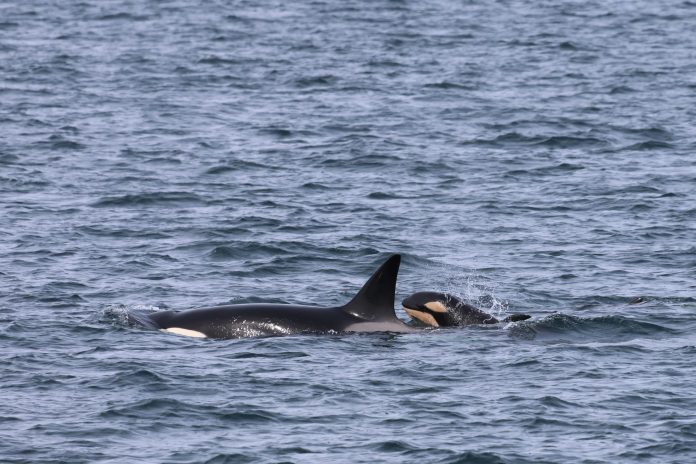
A new Bigg’s killer whale calf has been spotted in the Salish Sea, just off the coast of Vancouver Island this weekend.
Bigg’s killer whales, also known as transient orcas, are known to be native species of the Salish Sea, as well as the Juan de Fuca Strait.
They are known for their mammal-based diets, whereas southern resident orcas eat only Pacific salmon.
This new transient orca calf was spotted and documented by the Pacific Whale Watch Association (PWWA).
According to the PWWA, the calf was first seen as part of a group of more than a dozen orcas on Thursday, March 20th in eastern Juan de Fuca Strait and was subsequently resighted several times over the weekend.
“In the images, you can still see fetal folds, along with distinctive orange coloration,” shares Erin Gless, the PWWA’s executive director, in reference to the creases in the calf’s skin from being scrunched inside its mother’s belly.
“These factors are normal and indicate the calf is quite young, likely a week or two at most.”
According to the PWWA, the calf was seen swimming directly alongside its 14-year-old mother, T046B3, also known as “Sedna,” throughout all encounters. In Inuit culture, Sedna is the Mother of the Sea.
The calf has been given the designation T046B3A and is believed to be Sedna’s first known calf.
(More below)

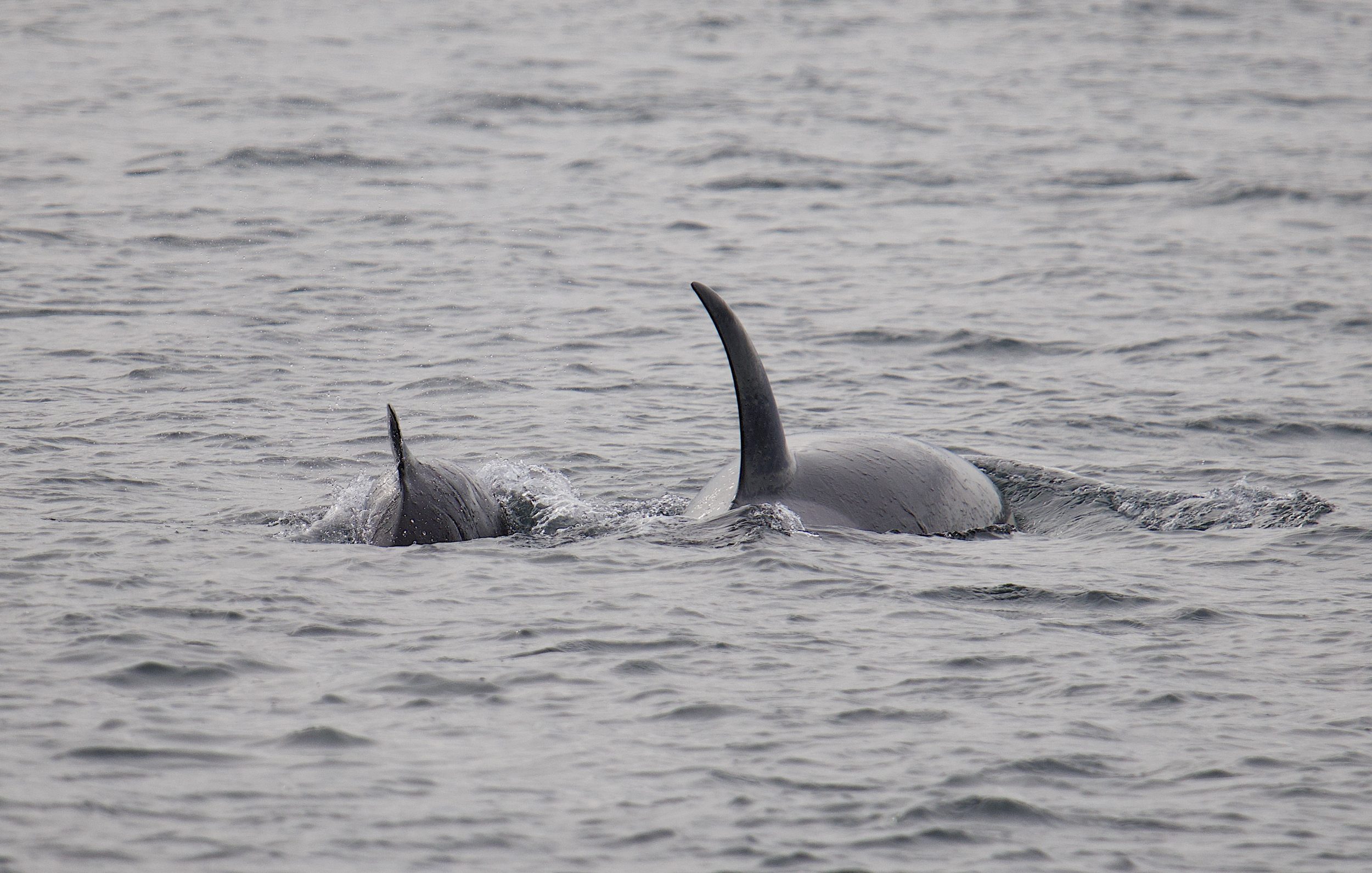
Sedna is well-known amongst the whale watching community in the Pacific Northwest, and according to the PWWA, her family story was nearly cut short almost 50 years ago due to humans capturing her ancestor to be held in captivity.
The story goes that back in March of 1976, Sedna’s grandmother, T046 “Wake”, was one of six whales captured and temporarily held by SeaWorld in Washington’s Puget Sound.
However, a man by the name of Ralph Munro, who was assistant to former Washington governor Dan Evans, witnessed the whales being captured while sailing with friends.
Munro was appalled at the cruelty of this practice and helped file a lawsuit against SeaWorld, which led to the whales’ release.
Wake and the other five orcas captured that day were the last killer whales to be captured in North America.
The PWWA says that Wake is thought to be responsible for eight calves, has as many as 16 grand-calves and six great grand-calves.
“Without the direct efforts of Ralph Munro, at least 30 Bigg’s killer whales would have never been born,” said the PWWA in a media release.
“His passing at the age of 81 was announced last Thursday, the same day the new orca calf was spotted. Today, Bigg’s killer whales are thriving in BC waters.”
There are only around 380 Bigg’s killer whales left in the world today, and just 76 remaining Southern Resident killer whales.
💬 Join the conversation
No comments yet — be the first to start the conversation