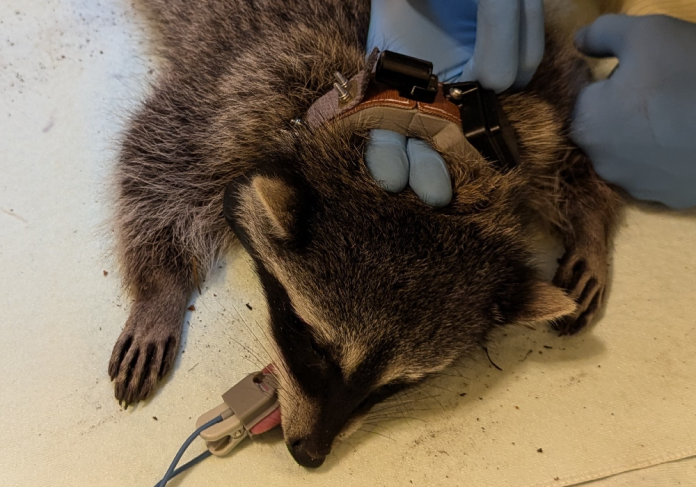
Royal Roads and the BC SPCA’s Wild ARC program have joined forces in a new study to monitor how orphaned raccoons are reintegrating into the wild.
Wild ARC is an organization that takes in wild animals that require rehabilitation before being released back into the wild.
Over the summer, they took in several baby raccoons and have now released nine of them in the Greater Victoria area, outfitted with GPS collars to remotely track their movements, survival rates and causes of mortality.
They will be tracked for six months, so their growth is not stunted by the collars. This study began in September, so it will conclude sometime in February.
“The BC SPCA’s Wild ARC cares for up to 80 orphaned raccoon kits a year. After their rehabilitation, we release the juveniles in fall, similar to when young raccoons would be leaving their mothers in the wild,” said Wallis Moore Reid, Senior Wildlife Rehabilitator with Wild ARC.
He added that only three studies on rehabilitation-reared and released raccoons have been conducted in North America over the last 30 years.
This research will offer data on how the orphaned raccoons are integrating back into their natural environment and may inform Wild ARC’s rehabilitation care practices and protocols to increase the survival rates of released juvenile raccoons.
Wild ARC says that even though raccoons have adapted to living in urban areas, juveniles are particularly vulnerable as they must learn how to survive on their own.
Of the nine raccoons outfitted with the GPS collars, only one is suspected to have removed the device, one was killed by a predator, and a third was caught by a pest control company and re-released into the wild.
“More than 80% of animals admitted to Wild ARC are due to human causes. It’s so important to recognize we all have a shared responsibility to see the intrinsic value of and coexist with urban wildlife,” says Moore Reid.
“Human-wildlife conflicts can be reduced by keeping wild animals healthy and, importantly, by keeping them wild.”
He says raccoons are attracted to human food sources and may become accustomed to this, thus losing their fear of people, damaging property and drawing more animals to the area.
The only way to mitigate this is to make unnatural food and shelter attractants inaccessible to the creatures.
According to Wild ARC, this can be done by securing garbage, compost and recycling until the morning of collection day, harvesting fruit when it’s ripe to deter access, sealing or repairing openings in structures to prevent animals from entering, keeping pets away from wild animals and not feeding wild animals.
The BC SPCA encourages members of the public to call their animal helpline at 1-855-622-7722, or email Wild ARC, to report a sighting of a collared raccoon if they appear distressed, injured or sick.