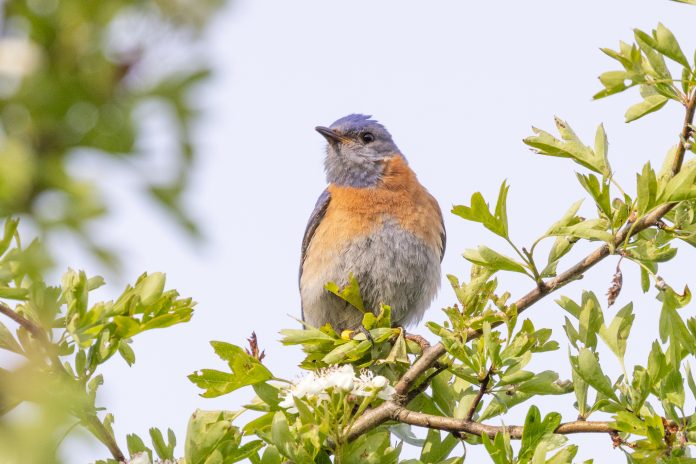
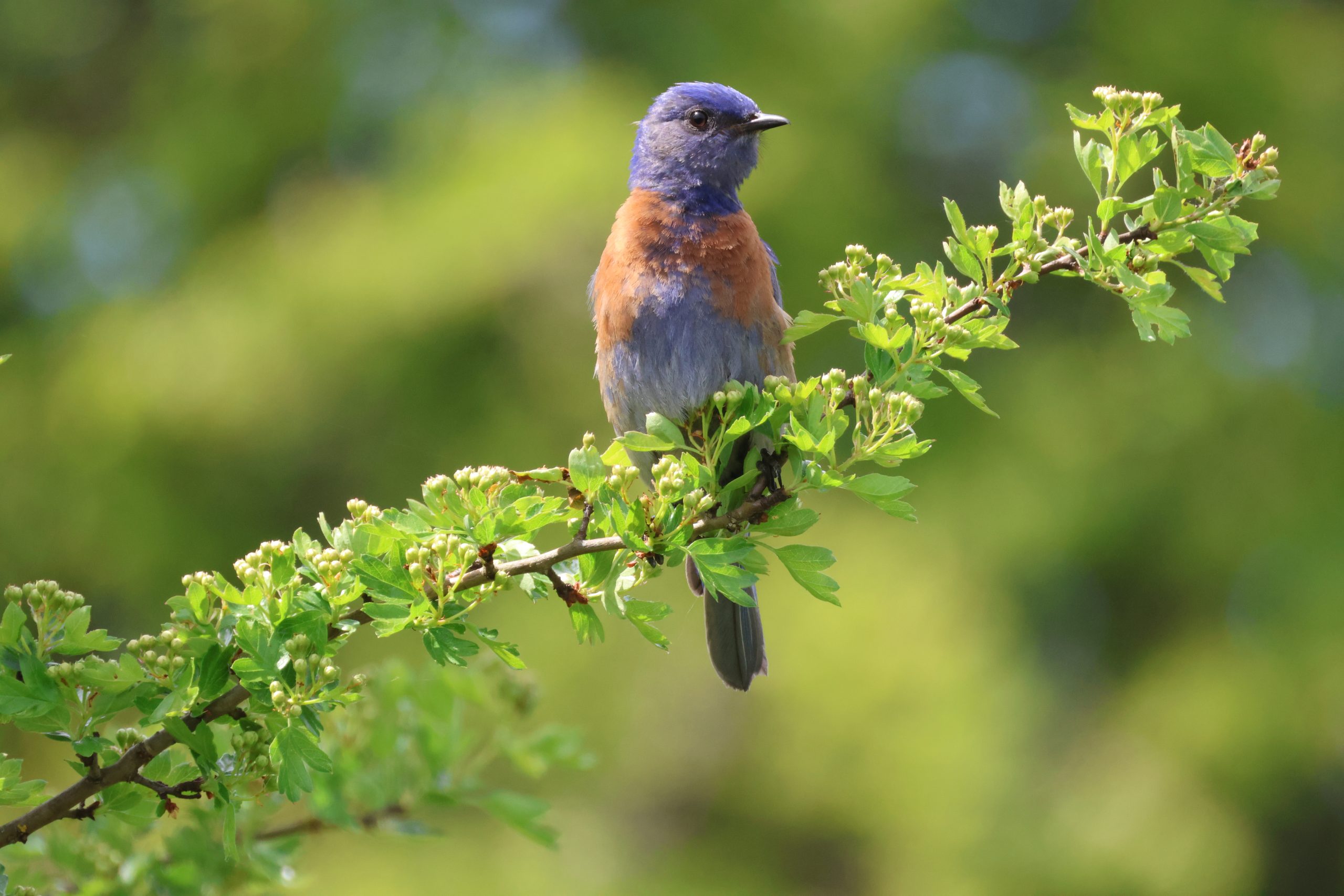
The western bluebird population on Vancouver Island is on the rise after the species was missing from the region for decades.
The birds were historically abundant on Vancouver Island until the 1970s, making use of the region’s Garry oak ecosystems for shelter and food sources.
Western bluebirds often nest in the hollows of Garry oak trees, on the border of the camas meadows that were guarded by First Nations before development accelerated in the Pacific Northwest.
Those Garry oak ecosystems shrank rapidly in the 1970s to 1990s due to urban development, and today very little of the original Garry oak ecosystems are left in the region.
As a consequence of this, the last western bluebird was seen on Vancouver Island in 1993, at which point the birds were considered extirpated—no longer existing in a particular region—from the area for decades.
An initiative intended to re-establish the bird’s population on Vancouver Island was launched in 2012, dubbed ‘Bring Back the Bluebirds’ and led by a team of volunteers in the Cowichan Valley.
The project was taken over by the non-profit British Columbia Conservation Foundation (BCCF) in 2017, and has since made strides in increasing the population numbers in the area.
The project is a coordinated effort from volunteers with a passion for conservation.
One of those volunteers is Jacquie Taylor, who has spent hundreds of hours with BCCF over the years trying to bring the birds back to Vancouver Island.
“I heard about the need for someone to take the reins, and I’ve always wanted to do hands-on conservation work,” Taylor told Victoria Buzz.
“It’s a full-time gig in the summer, but it’s my passion and I love it.”
The process of bringing these birds back takes dedication from a number of volunteers like Taylor, from south of the border in Washington to Vancouver Island and everywhere in between.
BCCF acquires birds from an organization called the Ecostudies Institute in Washington—a process that requires care, tact and a slew of permits.
“We did a little transfer at a gas station on the border,” Taylor laughed.
“We’ll bring over a whole family, set them up in an aviary with boxes in the area.”
She went on to explain that they receive young birds about a week before they fledge, between the time when they hatch and when they learn to fly.
The process of fledging in the area means the birds can imprint on the area and that, hopefully, the family will come back the next year.
Successes in bringing back the western bluebird
The organization has seen the fruits of their labour emerge in recent years, with the 2026 count yielding the highest number of birds on Vancouver Island since their abundance in the late 20th century.
“It was the best nesting success we’ve ever had,” Taylor explained.
“One hundred twenty-six young were added to the population here, and we had 30 adults. That’s the most that we’ve ever had in the project.”
The organization has a sister project on the San Juan Islands, who also saw a record-breaking year.
That project saw 37 adults and 93 young.
“We have 286 bluebirds in the Salish Sea right now,” Taylor said with pride.
The numbers are good news for conservationists in the region in a time when wins like this can be hard to come by.
For birders on Southern Vancouver Island, the news gets even better.
The project’s success means that expansion to the Victoria area is on the horizon.
Victoria expansion effort
In this expansion effort, BCCF is primarily asking for landowners who are interested in sharing their bluebird-appropriate habitat with these incredible animals.
Those who live on Garry oak meadows or similar savannah ecosystems can host a few boxes on their property and be a part of bringing the birds back to their natural habitat in the Greater Victoria area.
For the extremely passionate, there’s also the possibility of helping the organization with translocations by providing a temporary aviary for the birds.
Those who think they may have an acceptable property are encouraged to reach out to the organization on their website here.
For the rest of the birding community of Vancouver Island, the work lies in getting out the binoculars and hoping to get a fateful glimpse of the bird returning to its historical habitat.
In the birding world, the first personal sighting of a particular species of bird is called a “lifer.”
If things go well, it’s possible that many naturalists in the area may get that accolade with their first glimpse of the western bluebird returning to Vancouver Island.
💬 Join the conversation
No comments yet — be the first to start the conversation