

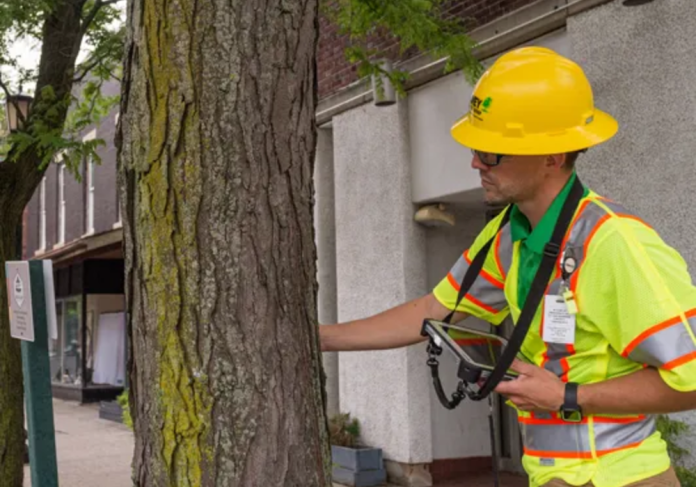
Following an uncommonly warm and dry winter, local arborists are warning Victorians of the impacts the climate conditions may have on trees in the Greater Victoria region.
Local arborist Matthew Coady, who works as an area manager in Victoria for Davey Tree Canada, says that uncharacteristically warm weather can affect many plants in different ways.
One example of the impacts may be a tree’s timing being interrupted.
“So we get warm weather, buds can burst, leaves can come out, flowers can pop out, and if there is a freeze that follows, it can make the buds a little bit more vulnerable,” Coady told Victoria Buzz.
“It makes them more susceptible to freezing, they could die off, they could wilt, they could do a number of things that aren’t typical of what you see with your leaves or your trees.”
This year’s weather conditions have brought unseasonal warmth throughout the latter months of winter, when much of Canada is still experiencing snow and cold temperatures.
According to data from Environment Canada, 2025 was among the driest years in the last quarter-century.
Although Coady says trees in the region are resilient, the stressors they experience can compound which can take a serious toll on the overall health of a tree.
While unseasonal warm weather has been an issue this year, he noted that the dryness of winter could end up to be a major detriment to Victoria’s trees.
“The drought season that we get in the summertime is an added stress, a pretty fair stress on the trees on the island and the coastline here,” said Coady.
“So it can lead to much larger issues with trees, with the warm weather, but my concern is more from the drier winter.”
Though Coady laughed that the warm, dry weather is good for people in the region, and allows Victorians to enjoy the winter months a bit more, these conditions can add up for the trees.
Specifically, the lack of precipitation on Vancouver Island has been detrimental to some trees that are not as drought-tolerant as others.
Coady says two such trees are western red cedars and grand firs.
“If you drive up and down the island you’ll see all these dead tops and those are usually the ones you can bank on them being,” he explained.
“This winter, with a lack of precipitation and a lack of snowfall on the higher elevation areas, its concerning for the drought season.”
Again, he noted that the additional stresses can add up and cause trees to become compromised.
When asked what will happen to the trees on Vancouver Island if the warm, dry conditions become more pronounced, Coady says that people can expect more frequent and severe wildfires impacting island communities.
“Other poor consequences could be trees failing, coming down, limbs coming down and damaging property,” he added.
“If the limbs are compromised or if the tree is stressed, it’s much more likely to fail and to be compromised.”
How to help your trees survive
Coady recommends people who may be concerned about one of their trees’ health do two things to mitigate the impacts of the dry, warm weather: water the tree deeply and use mulch around the base of the tree.
“After it gets really dry for a couple of weeks, water your trees so it gets to the deep roots,” he explained.
“A lot of people water their grasses, but that doesn’t get down to the tree roots—it’s just a surface level watering and oftentimes, the trees are left with dry soil conditions below.”
Mulch is a relatively inexpensive way to help keep trees healthy while experiencing adverse conditions. Coady says a truck full should only cost between $20 and $40.
The best way to use mulch is to peel away the sod surrounding a tree, while leaving a bit of space around the trunk of the tree so that water doesn’t collect and can trickle down through the soil.
“If you put mulch down, that’s one of the best things you can do for your trees,” he said. “It recycles nutrients in the mulch and gets them down into the root zone below.”
Coady added that having grass around a tree can actually be bad for them, as the grass steals a lot of the moisture and nutrients the trees need to survive.
Furthermore, he said that it is a good idea to bring in a trained arborist to examine trees’ health. This is a service that is free with many arborist companies, including Davey Tree Canada.
“Even if you think a tree is healthy, it’s worth it to bring in an expert to make sure it stays healthy,” said Coady.
“Being reactive can often be much more costly and much less ideal—the tree could fail altogether.”
He noted that if a tree needs to come down, that service adds up to a much higher bill than ensuring adequate upkeep.
Furthermore, legacy trees are priceless, and when they come down, a new sapling just will not compare.
💬 Join the conversation
No comments yet — be the first to start the conversation