
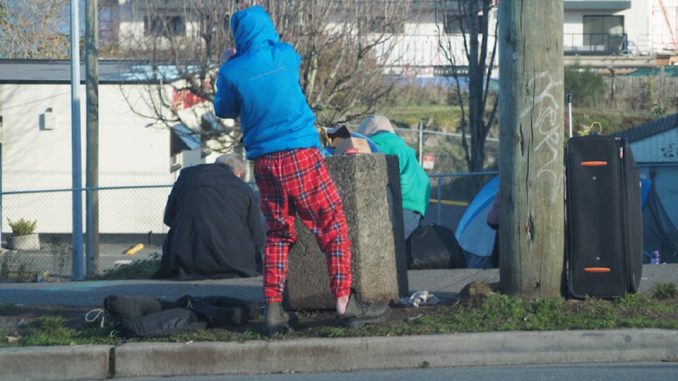
The City of Nanaimo’s most recent Point-in-Time (PiT) count has revealed the number of unhoused individuals in the city are on the rise, and have been since 2016.
The PiT count is a one-day snapshot of homelessness in a community, and is designed to estimate the number of people experiencing homelessness on a given night.
A team of volunteers go out into the community and survey as many unhoused people as possible in order to get the data, which is then compiled into a report to help municipalities navigate how best to help the unhoused people in their region.
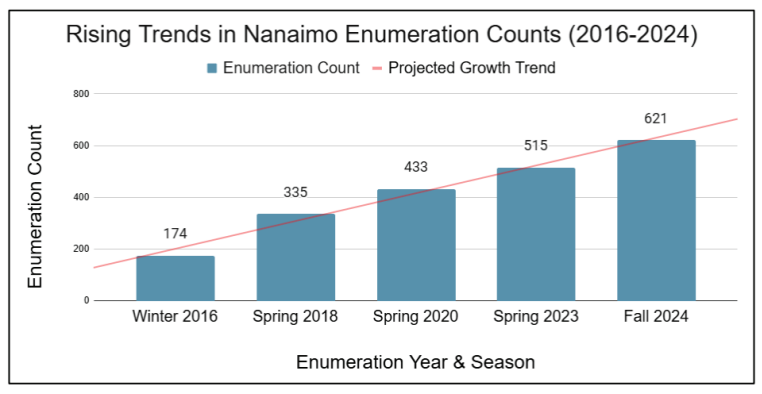
According to the PiT final report for 2024, there were at least 621 unhoused people surveyed in the city.
This represents an increase from the previous count which recorded 515 unhoused people in the region. In 2016, there were only 174 unhoused people surveyed.
Of the 621 unhoused individuals surveyed, the 2024 PiT report shows that 427 were unsheltered, living on the street, or sleeping rough.
Furthermore, 154 were in traditional homeless shelters and 40 were sheltered in detox, hospitals and treatment facilities.
“Even with the surge of new shelter and transitional beds that pulled 91 more people indoors than last year, nearly 7 in 10 respondents were still sleeping rough or in institutions, and the overall count kept rising,” reads the PiT report.
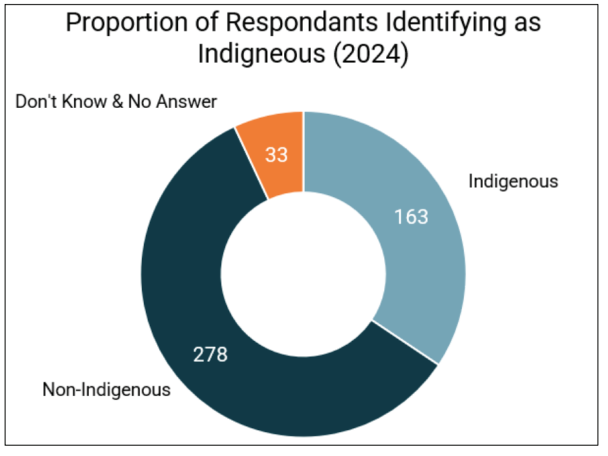
Additionally, the data from the PiT report shows that Indigenous people continue to be disproportionately affected by homelessness.
Though Indigenous people make up only 8% of the city’s population, over one-third of the unhoused individuals surveyed for this PiT count identified as Indigenous.
When it comes to contributing factors of homelessness, mental health conditions and addictions impact the majority of those without shelter.
The PiT report shows that 350 (74%) reported addiction challenges, and 311 (66%) reported mental-health conditions. Over half of those surveyed are also impacted by chronic medical conditions.
“Without Indigenous-led, culturally safe housing that embeds primary care, harm-reduction, and mental wellness supports, people will keep cycling between the sidewalk, the ER, and the morgue, and the problems will only compound,” reads the PiT report.
As for how these individuals became unhoused, the report found that 44% were impacted by financial gaps, such as rising costs forcing them to move-out.
Meanwhile, 40% became unhoused due to various household conflicts, 7% lost access to shelter due to abuse and violence in their households, 17% lost housing through racism or other bias and 19% were tied to mental-health or substance-use crises.
“Housing is lost not through a single doorway but at the intersection of high rents, personal upheaval, discrimination, and unmet health needs,” reads the report.
The report added the main drivers of homelessness remain structural and local. Some of these factors include rent inflation, household conflict, discrimination and service gaps.
💬 Join the conversation
No comments yet — be the first to start the conversation