

The Fraser Institute has released its latest report card on British Columbia’s Elementary Schools across the province, including the Greater Victoria area.
It compiles a range of key, objective performance indicators into a single, public document, allowing anyone to analyze and compare the performance of individual schools.
In doing so, the report card supports parents in selecting the best school for their children and provides valuable insights to those working to enhance their schools.
Who’s included?
This edition contains two types of elementary schools: those that enroll both Grade 4 and Grade 7 students (the majority of schools); and the Type-2 schools, which only enrolls Grade 4 students and sends anyone above Grade 5 to middle or junior high schools.
The performance indicators, ratings, and rankings for both school types are calculated in the same way, except for the Grade 7 test results.
Since Type-2 schools don’t have Grade 7 students, their academic data is based on the Grade 7 test results of former students, who take the tests after moving on to middle school, and the results are then attributed to the Type-2 school.
It’s done this way, because while Type-2 schools may not directly influence the academic performance of their students after they leave for middle school, it is assumed that the foundation laid in these schools affects students’ later success.
How did Victoria’s schools do?
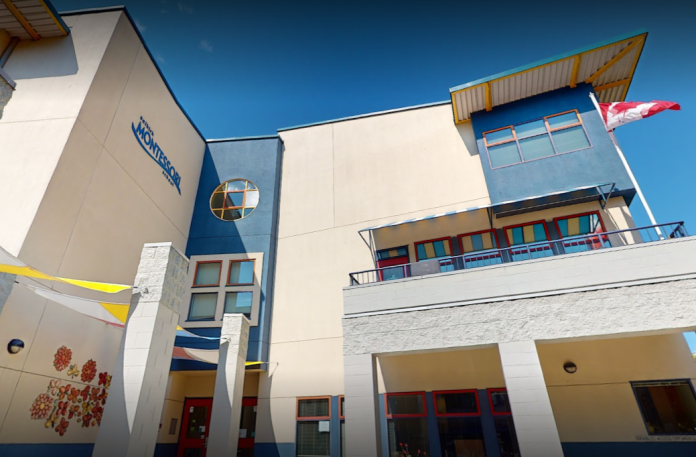
The top ranking Victoria school is Selkirk Montessori, with a 10.0 rating for the 2022/2023 school year, and a 9.9 overall rating from the last five years.
According to the charts, this school’s performance level has remained consistent over time.
Other well-ranking schools in Victoria include the following:
- West-Mont Victoria with 9.0
- Glenlyon Norfolk Victoria with 8.9
- Maria Montessori Academy with 8.7 for 2022/2023 and 7.8 for the past five years
- St. Margaret’s Victoria with 8.6
- St. Patrick’s Victoria with a 8.5 for 2022/2023 and 8.6 over the past five years
There are a total of 55 schools in Victoria that are on this list, and while many did very well, there are a few that received a poor score. Many factors can contribute to this, including a simple lack of data over the last few years.
Some of the lower performing schools included Savory with a 2.2, David Cameron with 3.2, and Hans Helgesen with a 3.5. Colwood Public School, Tillicum Community Public School, and Victor-Brodeur all received a rating of 3.9, placing them at 839 out of 950 schools.
Notable Vancouver Island schools
The highest scoring school on Vancouver Island/surrounding islands (aside from Victoria’s Selkirk Montessori), included Pender Island’s Elementary-Secondary with 8.5, Christian in Duncan with 8.4 from 2022/2023 and 7.0 over the last five years, and Pauline Haarer in Nanaimo with 8.1 from 2022/2023 and an overall 6.5 from the last five years.
How do they indicate score?
The report card’s overall rating of each school’s academic performance is based on eight indicators:
- Average Grade 4 literacy score on the Foundation Skills Assessment (FSA)
- Average Grade 4 numeracy score on the FSA
- Average Grade 7 literacy score on the FSA
- Average Grade 7 numeracy score on the FSA
- The gender gap in Grade 7 literacy FSA scores
- The gender gap in Grade 7 numeracy FSA score
- The percentage of students whose FSA scores are below expectations
- The percentage of students who were absent, exempted, or did not provide meaningful responses on the tests
These indicators provide a comprehensive view of a school’s performance and allow for the tracking of progress or decline over time, as they are based on annually updated data.
If you’re unfamiliar with the gender gap indicators, it uses Grade 7 FSA results to assess how well schools are closing the achievement gap between male and female students in literacy and numeracy.
The gap is calculated by measuring the difference in average scores between girls and boys on these tests, with the difference reported along with the gender that performed better.
By comparing male and female students’ results in literacy and numeracy, the indicators reveal how well schools are meeting the needs of all students, regardless of gender.
If you wish to take a look at the full 2024 Report Card on British Columbia’s Elementary Schools, you can do so here.