


Duncan filmmaker’s documentary gives a glimpse into the impact of reconciliation
Shifts towards awareness and change one gift at a time!
A beautiful glimpse into the dedication, impact, and importance of nature and reconciliation in an educational setting!
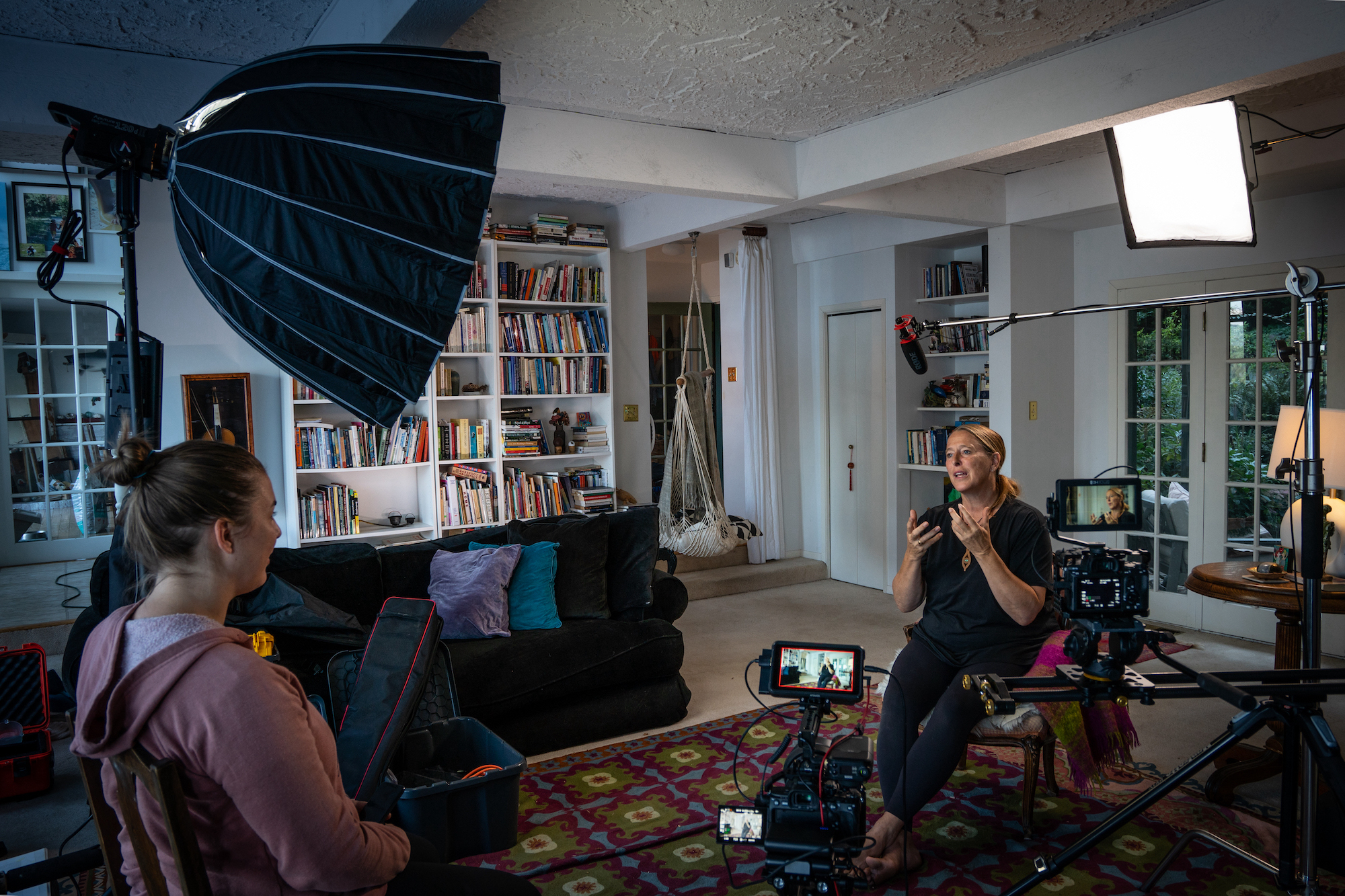
Duncan filmmaker Arianna Augustine is thrilled to present her new documentary 10,000 Gifts—focused on a responsibility that goes beyond reconciliation and works towards reconciliACTION.
With the assistance of the community and TELUS’s BC and AB STORYHIVE’s Game Changers Documentary Edition grant, 10,000 Gifts has become a powerful entity and will stir conversation for years to come.
This documentary focuses on the Q’shintul Mill Bay Nature School in the Cowichan Valley and how the students, staff, and Quw’utsun Elders challenge modernity in an educational setting—particularly how the students interact with nature, their surrounding historical environment, and their impact on the future.
It is from this approach, that the project 10,000 Gifts came to be, which aims to capture the true significance of the Quw’utsun speaking peoples’ 10,000 years on the land and the lives, knowledge, and history that came from such a large duration of time.
It’s available to stream on TELUS Optik TV Channel 9 and STORYHIVE’s YouTube channel!
“It’s pretty amazing, I felt honoured to receive the funding [from TELUS STORYHIVE],” Augustine told Victoria Buzz.
“I feel really proud that the film can be out there and shared with a broader audience on a platform that’s more widely distributed.”
Augustine said that she had an existing relationship with the school from previous projects and knew the Elders. So, when she saw the STORYHIVE grant application opening, it made it really easy to begin discussing the possibility of a film to capture their 10,000 gift journey.
“When I saw this [STORYHIVE series], which was called ‘The Gamechangers,’ and was focused on people challenging the status quo and creating more sustainable and connected communities, I thought this was the perfect story for it…the school was thrilled.”
Shaun Cathcart, Program Manager at TELUS STORYHIVE, felt the same!
He shared with Victoria Buzz the importance of supporting local creators and why this story was a must.
“We are always looking for stories like the one Arianna pitched to TELUS STORYHIVE—stories that showcase people and organizations doing amazing and innovative things to strengthen their communities and foster local connections,” Cathcart said.
“Arianna’s film beautifully shows the power of grassroots initiatives to bring together different members of the community and encourage mutual understanding and respect. I think this project could inspire others to start similar initiatives in their own communities.”

Victoria Buzz asked Augustine about her filming approach—especially with such a large cast of characters and in a nontraditional teaching environment.
Augustine highlighted the need for flexibility in her pitch. She’s familiar with the nature of the school as very change-oriented as they shift to the students’ needs.
So, to honour their commitment to that student-focused environment, she left room for the project to evolve over the filming and production process.
“The fact that it’s an ever-evolving environment, I kept that in mind in the pitch and it was a very collaborative process with [the staff] and the Elders,” said Augustine.
“It left space for the story to evolve and unfold naturally based on what was currently changing in the school.”
10,000 Gifts was an idea proposed by a staff member and originated from a smaller project that she did with her students where they attempted to collect 10,000 beads.
After seeing how impactful that was and how excited the children were, the project evolved and expanded and the manifestation of 10,000 Gifts as a documentary and legacy began.
The film opens with students, staff, and Elders reflecting on what the number 10,000 means to them, and how if you really sit and think about how big that is, it’s almost an incomprehensible number.
We watch as the narrative brings discovery, growth, and deeper understanding for the students and staff as they work closely with Quw’utsun Elders and others who have captured the importance of awareness and reconciliation.
The closing scenes involve a gift ceremony, where anyone with a relationship to the school was invited to leave a gift and hear powerful statements from both the students and Elders about the significance of 10,000 years of history and how the relationship between us and the land must continue to evolve.
With sadness, Augustine mentioned a recent passing of one of the key Elders in the film, who was a guiding force and leader for herself personally as well as the school.
So, going forward, she mentioned that it is uncertain how the 10,000 Gifts will continue moving forward, but no matter what, the idea and purpose remains the same.
Anyone that has a relationship with the school are all welcome to participate in this collected action towards reconciliACTION and community building.

“What I hope someone will take away from the film, is what is possible in education,” Augustine said.
“In today’s day and age, we’re seeing a lot of people looking for something different. I grew up with a very alternative education, and I think [Mill Bay] school is an example of what is possible while still within our current framework.”
Within the documentary, a lot of the students discuss the idea of moving from a triangle structure to more of a circle or rounded triangle.
So, the hierarchy that places children on the bottom in traditional schools shifts to a more student-included and focused system. This gives the kids agency and encourages maturity and accountability while also maintaining authority figures there to act as a guiding hand.
Additionally, the school doesn’t follow a traditional grading system, but rather places kids where they need to be based on educational and emotional comfortability and maturity.
“Mill Bay Nature School…is pioneering doing something different,” Augustine said.
“It’s an example and inspiration to demonstrate that we can do things differently…and what happens when we center children and when we look to our Elders for guidance on how to go about building and educating a community.”
At this point, the school continues to grow year after year and now include age groups equivalent to middle school—they hope to eventually give children the option to stay throughout the entirety of their education (equivalent to kindergarten to high school).
The whole process for the creation of 10,000 Gifts took over two years, which includes her existing relationship with the school giving her the ability to propose the idea and up until the finished product.
“I am a facilitator for the message, I view my role as giving space and documenting the voices of the people really doing the work,” Augustine said.
“[Students, staff, and Elders are] doing the hard work…I’m just honoured that I could be there to document and share it with the world.”
When Victoria Buzz asked about the impact this project has had on her life and her capabilities as a filmmaker, Augustine shared that although it was a huge learning curve, she’s beyond proud and will continue to carry a lot of what she learned with her.
“It’s the first project I personally produced and directed. It was a massive undertaking…so I learnt a lot and will continue to carry a lot of those skills with me.”
“The biggest teachings came from the Elders and have to do with ‘things take the time they take,’ taking the time to slow down and listen to people talk [and] meet with people…is so important.”
Her closing statement was a true nod to the driving force of the kids at Q’shintul Mill Bay Nature School and everyone involved in their education.
“For people watching it, I hope you can see the impact and the power kids have, and the importance of looking to our Elders—particularly in Indigenous communities who have been here for millennia—for guidance…and how we can tread lightly going into our future.”
If you wish to learn more about TELUS STORYHIVE and the opportunities they present for creators, you can visit their website.
“Our mission is to continue celebrating and amplifying Canadian-created content that’s locally reflective and relevant,” Cathcart said.
“We want to support storytellers of all experience levels and from a diversity of backgrounds.”
Join the conversation
No comments yet — be the first to start the conversation