


A new study has been released showing the importance of the Trans Canada Trail and its upkeep.
In and around Greater Victoria, the trail includes beloved local routes like the regional Lochside Trail, the Dallas Road Waterfront Pathway and the historic Galloping Goose Regional Trail.
According to the new report by Canadian Pacific Consulting Services (CPCS), The Cost of Doing Nothing, if the 30,000-kilometre trail network doesn’t receive sustained investment, it could fall into disrepair by 2045.
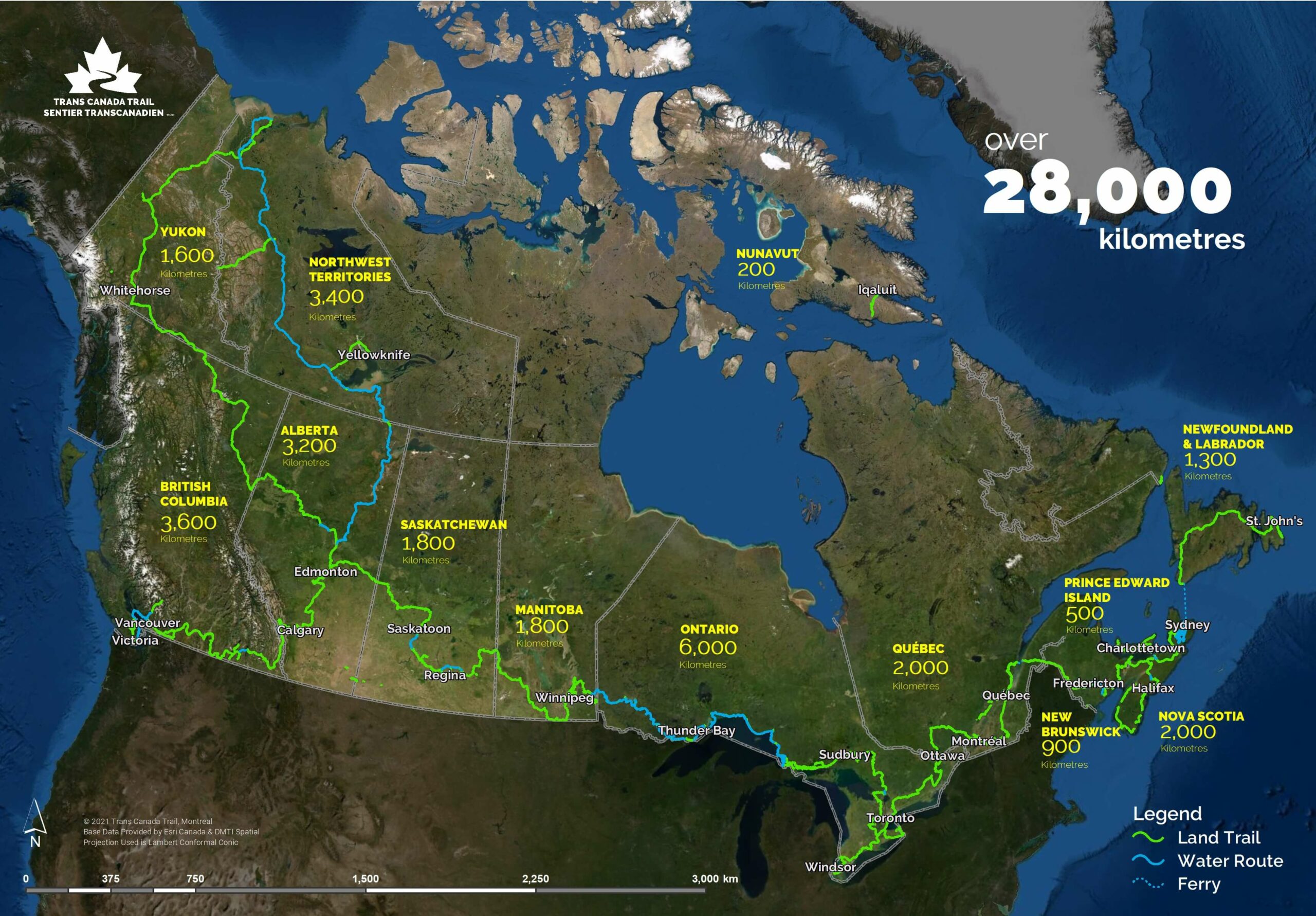
The Trans Canada Trail is the longest multi-use trail system in the world, reaching every province and territory and connecting all three of Canada’s coastlines.
All sections of the trail are managed locally and support different activities and community needs.
Trans Canada Trail is the organization that advocates for, stewards and champions the nationwide trail system as a registered charity that receives funding from the federal government through Parks Canada, various provincial and municipal governments and generous donors.
Now, the organization is calling on the federal government to renew its at-risk funding.
The recent report found that the trail contributes around $2 billion a year in tourism spending and roughly 1,000 jobs that are concentrated in small and rural communities.
The report’s research found that every dollar spent on timely maintenance can save five dollars or more in future rehabilitation costs and that every dollar Trans Canada Trail puts into a project typically draws another three to five dollars in local matching investment.
“The Trail stands as a reminder of what sustained, shared investment in this country can accomplish,” said Mathieu Roy, CEO, Trans Canada Trail.
“It’s safe, accessible infrastructure that Canadians quietly count on, and the data now shows what’s at stake if we let that go. The federal government is right to invest in major projects that build economic resilience—but a trail network that connects every province and territory is social infrastructure in its own right and deserves the same consideration.”
Local trail groups, volunteers, municipalities, Indigenous communities, conservation authorities and charities across the country help maintain the trail network and Trans Canada Trail works hard to ensure funds go where they are needed.
The organization says long-term sustained federal funding is essential and will contribute to local economies, public health, tourism and access to nature in every corner of the country.
💬 Join the conversation
No comments yet — be the first to start the conversation