

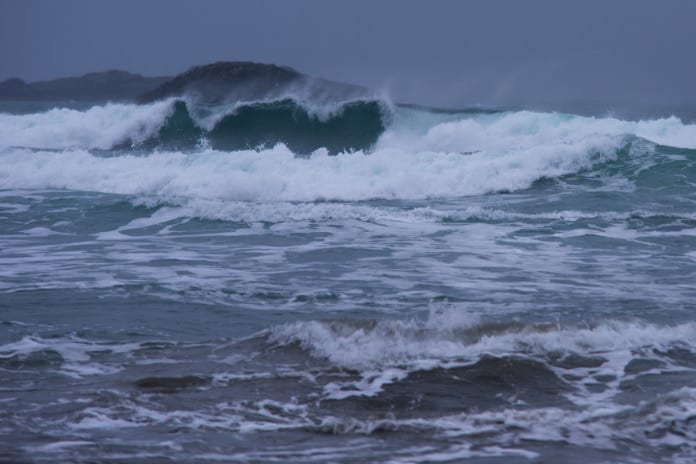
A massive ocean wave is making its way toward Vancouver Island, and it could cause water levels to rise along Greater Victoria’s coastline this month.
It’s called a Kelvin wave, and while it might sound a little scary, it’s not the kind of wave you might be picturing.
Unlike a tsunami, a Kelvin wave doesn’t come crashing onto shore. Instead, it slowly raises ocean levels as it moves along the coastline.
Scientists expect the wave to reach BC around mid-October, although exactly how much it could affect Greater Victoria remains unclear.
The biggest concern is what happens if the higher water levels arrive at the same time as strong winds, storms or unusually high tides.
That combination could lead to flooding in some low-lying coastal areas.
So, what exactly is a Kelvin wave?
Think of it as a massive movement of water travelling through the ocean.
These waves can stretch thousands of kilometres and are often connected to El Niño, a weather pattern that affects ocean temperatures and winds across the Pacific.
As the water moves, it can cause sea levels to rise slightly along the coast.
You wouldn’t necessarily notice the wave passing by, but you might notice the ocean sitting higher than usual.
When will it reach Greater Victoria?
The wave is expected to reach BC around the middle of October.
According to CBC News, Environment and Climate Change Canada scientist Bill Merryfield said a smaller Kelvin wave reached BC earlier this year.
That wave reportedly caused sea levels to rise by more than 30 centimetres in some areas.
Scientists are watching the latest wave closely, but it’s still unclear how much water levels could rise around Greater Victoria.
Could it cause flooding?
Possibly, but there’s no reason to panic.
The Kelvin wave itself isn’t expected to cause major flooding.
However, if it arrives during a period of high tides or stormy weather, the extra water could increase the risk of flooding along parts of the coastline.
That includes low-lying waterfront areas around Victoria, Oak Bay, Saanich, Sidney and other coastal communities.
It doesn’t mean those areas will flood, but it’s something worth keeping an eye on.
Should residents be worried?
For most people, the Kelvin wave likely won’t have much of an impact on their daily lives.
It’s a natural ocean event, and these waves have happened before.
Still, people who live or spend time near the water should keep an eye on tide levels and weather forecasts, especially during storms.
The Province of BC recommends that people living in flood-prone areas have an emergency plan and stay informed about changing conditions.
What happens next?
Scientists will continue tracking the wave as it moves toward BC.
For now, there’s no indication that a giant wave is about to hit Greater Victoria’s beaches.
Instead, residents may notice higher-than-normal ocean levels over the coming weeks, particularly during high tides.
The biggest thing to watch will be whether those higher water levels line up with any major coastal storms.
Residents can check Environment and Climate Change Canada for the latest coastal weather alerts.
💬 Join the conversation
No comments yet — be the first to start the conversation