
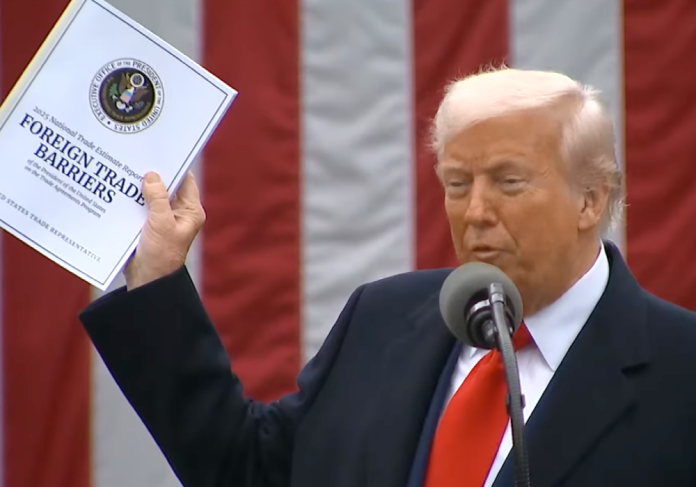
This morning, just hours after ‘Liberation Day’ reciprocal tariffs went into effect, United States President Donald Trump announced he would be pausing the tariffs for 90 days.
The pause comes after 75 countries impacted by Trump’s tariffs entered negotiations on trade agreements.
In the meantime, all these countries will still be subject to a baseline 10% tariff.
For Canada, this announcement will not change the active 25% tariffs on steel, aluminum, the auto sector or goods outside of the United States-Mexico-Canada Agreement (USMCA), nor will it affect the 10% tariff on Canadian energy.
Following this announcement, it is unclear which 75 countries were in talks with the White House.
The US government did not specify which countries would see a reduction to 10% tariffs and a pause while negotiations are ongoing; however, US Treasury Secretary Scott Bessent did reveal that Vietnam, Japan, South Korea and India were among the impacted countries.
In addition to the tariff pause announcement, President Trump announced that China would see a tariff increase to 125% on all imported goods.
This increased tariff comes in retaliation to China raising tariffs on US goods to 84%.
“Every country in the world who wants to come and negotiate, we are willing to hear you, we’re going to go down to a 10 per cent baseline tariff for them,” Trump said to reporters outside the White House this morning.
“China will be raised to 125 (per cent) due to their insistence on escalation.”
Since Trump’s initial Liberation Day announcement, US markets have fallen to their lowest point so far this year.
With this latest tariff pause and reduction announcement, markets have surged again for the first time in almost a week.