
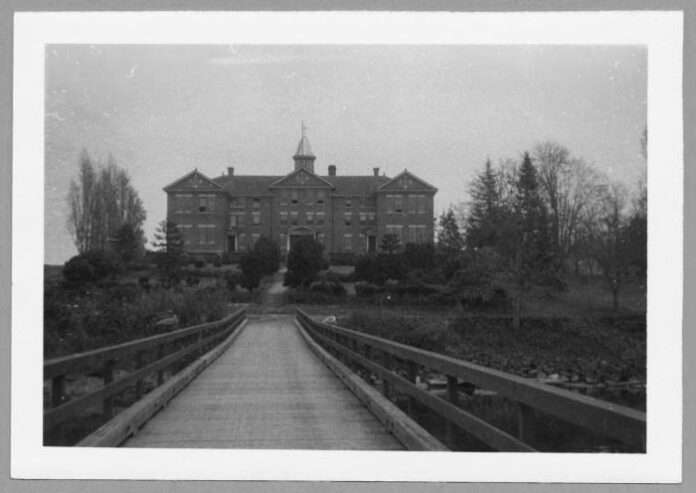
A new bill was brought to the House of Commons which would make it a Criminal Code offence to promote hatred towards Indigenous people by condoning, denying, justifying or minimizing facts about residential schools.
This bill prompted a BC-based analytics firm, Research Co., to survey Canadians about their education surrounding residential schools and their beliefs now.
According to this survey, British Columbian respondents said that 15% had been first taught about residential schools in elementary school, 31% said they hadn’t heard of them until high school and 29% responded saying they had never been taught about residential schools.
Only 5% of Canadians over the age of 55 said they had learnt about residential schools as compared to the 21% aged between 18 and 34, according to the survey.
When asked to look back on what respondents were told as students, 31% of British Columbians said they were told residential schools were reflected upon as a positive initiative by their teacher. In BC, 59% said that their teacher taught them that residential schools were negative.
Comparatively, eastern Canadian provinces had a much higher rate of teachers speaking positively about residential schools than western regions.
The question Research Co. asked respondents that indicates denialism—the disacknowledgement of the truth of a concept that is supported by the majority of scientific or historical evidence—came when those who took the survey were asked what their own personal assessment of residential schools is.
To this question, 27% of British Columbian respondents said they think positively of residential schools, whereas 69% think negatively of them.
Interestingly, the eldest demographic who took the survey, those aged 55 and over, think the least positively of residential schools (28%), but also had the highest percentage of those who said they were unsure of how they think about residential schools (19%).
Related:
In regards to the bill being presented to the House of Commons that would criminalize denialism of residential schools’ harms, respondents were asked whether they would like their MP to vote for or against the bill being passed.
To this, 57% of BC respondents said they would like their representatives to vote in favour of the criminalization, where 29% said they would have their MPs vote against it and 14% said they were unsure.
Research Co. says that their results are based on an online survey conducted between October 21st and October 23rd.
Respondents were 1,001 adults surveyed across Canada with the data being statistically weighted according to the most recent census figures for age, gender and region.